


























YTÜ’s model for transitioning to an AI-based autonomous university was presented at the YÖKAK International Conference on Quality Assurance and Accreditation
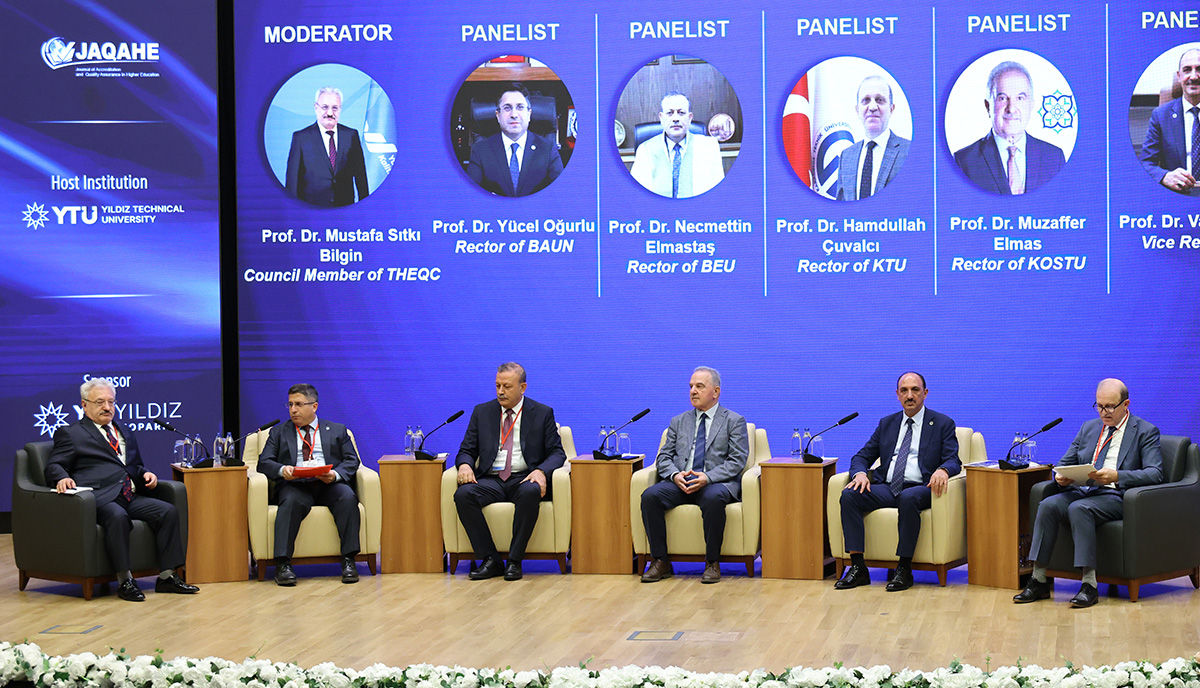
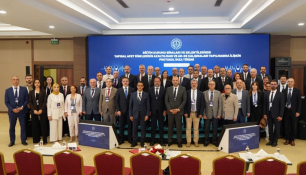
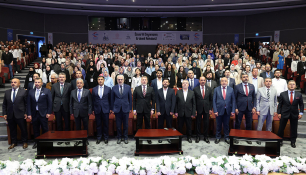
The 2nd International Conference on Quality Assurance and Accreditation, organized by YÖKAK, was hosted by Yıldız Technical University under the theme “Quality Assurance Systems and Artificial Intelligence in the Digital Transformation Process.” At the conference, which was attended by senior administrators from 171 universities, Yıldız Technical University’s model for transitioning to an AI-supported autonomous university, along with the YTU Publishing and YTU Certification Hub initiatives, were introduced to the higher education community.
Organized by the Higher Education Quality Council (YÖKAK), the 2nd International Conference on Quality Assurance and Accreditation, organized by the Higher Education Quality Council (YÖKAK), was held on September 14–15, 2026, at the Davutpaşa Congress and Culture Center of Yıldız Technical University.
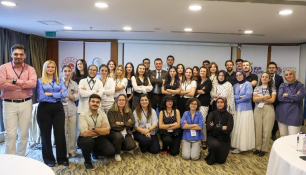
The conference was attended by rectors, vice rectors, and general secretaries from 171 universities; it also brought together academics, representatives of national and international program accreditation organizations, industry representatives, and various stakeholders in quality assurance processes. From our university, Vice Rector Prof. Dr. Göksel Ağargün, Chief Advisor to the Rector Prof. Dr. Özer Özer Çınar, Dean of the YTÜ Faculty of Civil Engineering Prof. Dr. Uğur Kurt, and numerous faculty members also attended the conference. Out of 316 abstract submissions, 259 were accepted following the scientific review process. The event was attended by over 1,000 people, including more than 650 registered participants, 259 presenters, and 120 invited guests.
During the two-day conference, the use of artificial intelligence in higher education, ethics and reliability, data protection, innovative governance models, digital transformation, and new quality assurance approaches were evaluated from various perspectives.
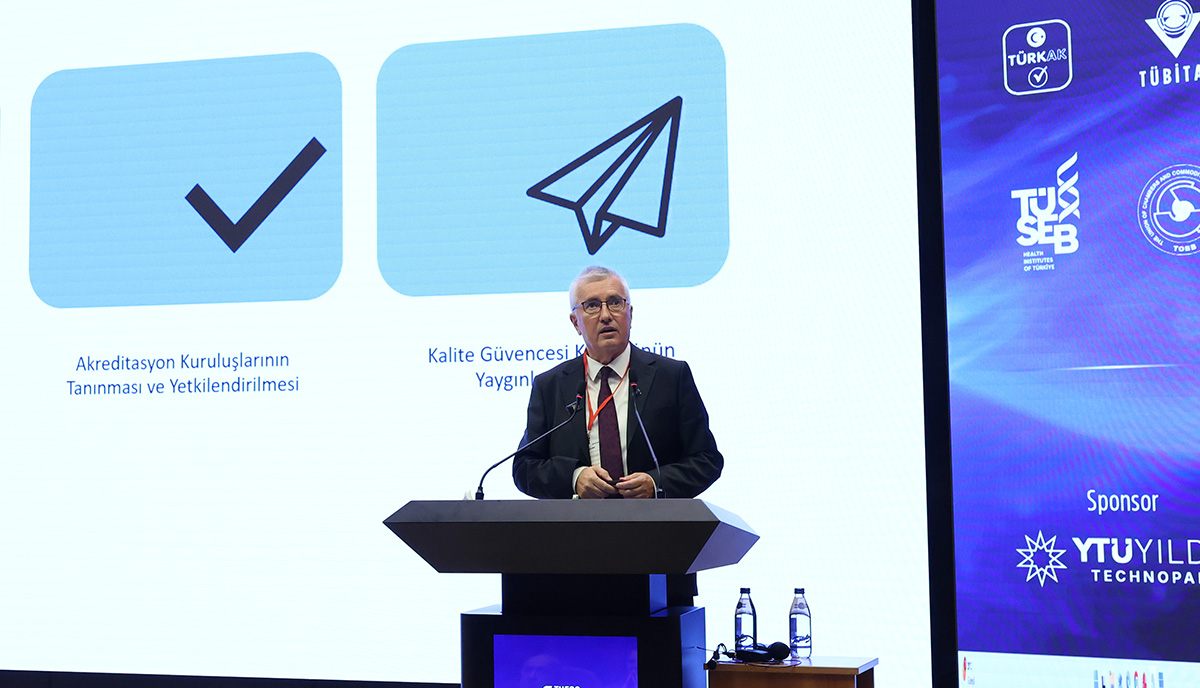
Prof. Dr. Ümit Kocabıçak: “We have an urgent need for quality assurance processes”
YÖKAK President Prof. Dr. Ümit Kocabıçak provided an assessment of the current structure of higher education in Turkey during his presentation at the conference. Noting that there are approximately 6,235,000 students and 190,000 faculty members at Turkey’s 208 universities, Kocabıçak highlighted that approximately 65 percent of these universities were established in the last 25 years.
Kocabıçak stated that, in addition to YÖKAK’s institutional accreditation efforts, the organization contributes to program accreditation through the authorization and recognition of national and international accreditation bodies, adding that spreading a culture of quality assurance throughout higher education is one of the fundamental goals.
Kocabıçak said, “We have an urgent need for quality assurance processes so that our universities can develop.”
149 universities in Turkey are accredited
According to information provided by Kocabıçak, 149 of Turkey’s 208 universities are accredited, while the accreditation process is ongoing for 31 universities. The goal is to have all universities in Turkey undergo the accreditation process within the next two years.
Noting that YÖKAK has also held the authority to conduct international institutional accreditation for about a year, Kocabıçak listed performance management, information management systems, graduate employment, alignment of program outcomes with learning outcomes, researchdevelopment, and processes related to societal contribution.
Providing information on program accreditations as well, Kocabıçak stated that there are 29 national accreditation organizations in Turkey and that program accreditations are also carried out through recognized international organizations. He noted that approximately 20 percent of bachelor’s degree programs and approximately 5 percent of associate degree programs are accredited.
“We must acknowledge where artificial intelligence stands today”
Kocabıçak also shared his assessments regarding artificial intelligence, the main theme of the conference, stating that the impact of artificial intelligence on higher education and the workforce can no longer be ignored.
Highlighting the transformation brought about by artificial intelligence as recent graduates transition into the workforce, Kocabıçak emphasized that higher education institutions must reassess their educational, quality, and employment processes in light of this change.
Kocabıçak noted that the new work structure created by artificial intelligence—particularly as recent graduates gain experience and transition into senior roles—is bringing about significant change, and stressed that higher education must be prepared for this transformation.
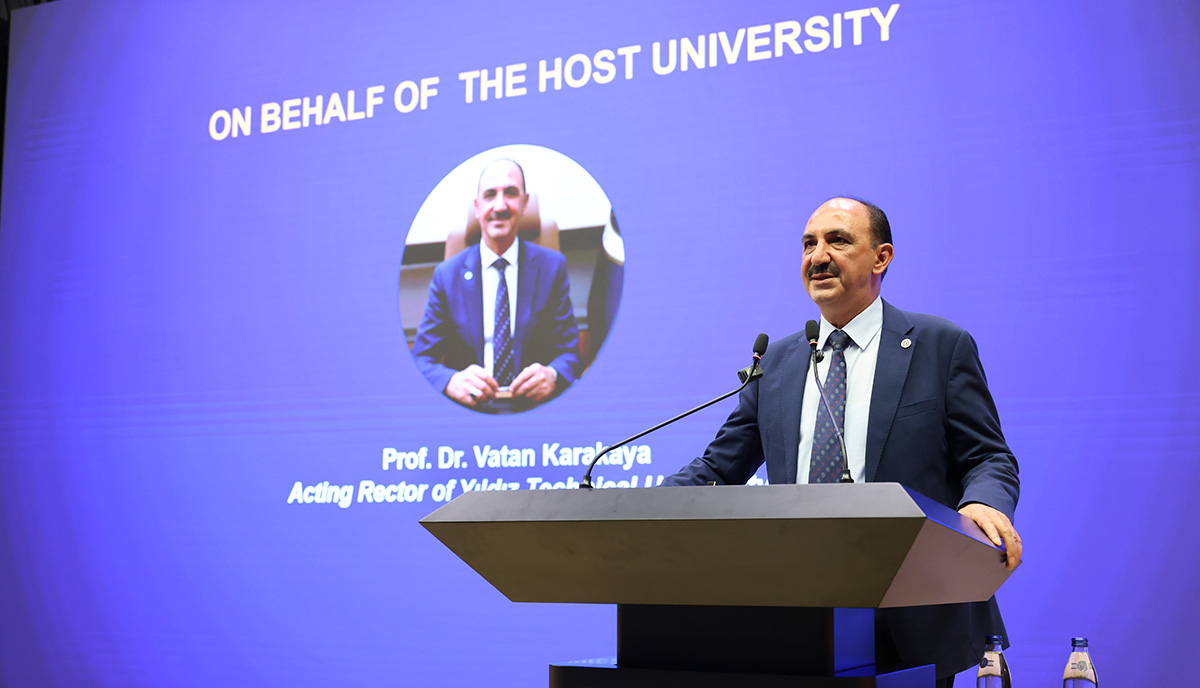
Prof. Dr. Vatan Karakaya: “The transformation in quality is about to usher in a new process”
Prof. Dr. Vatan Karakaya, Acting Rector and Vice Rector for Education and Teaching at Yıldız Technical University, highlighted in his speech that the concept of quality in higher education is undergoing a new transformation in the age of artificial intelligence.
Referring to YÖKAK’s efforts to develop a culture of quality in Turkish higher education and to internalize it within institutions, Karakaya said that positioning artificial intelligence as a decision-support tool that provides and interprets data in quality processes will be one of the key topics in the coming period.
Noting that artificial intelligence’s capacity to interpret data is reshaping the relationship between humans and machines, Karakaya emphasized that higher education institutions must correctly define the role of humans within this new structure.
Karakaya said, “Artificial intelligence has rapidly become a data provider—or more accurately, a data interpreter. It has reached a point where humans and machines are competing as sources of information. We are on the threshold of a new crossroads where humans must define their own position and leverage the power of machines.”
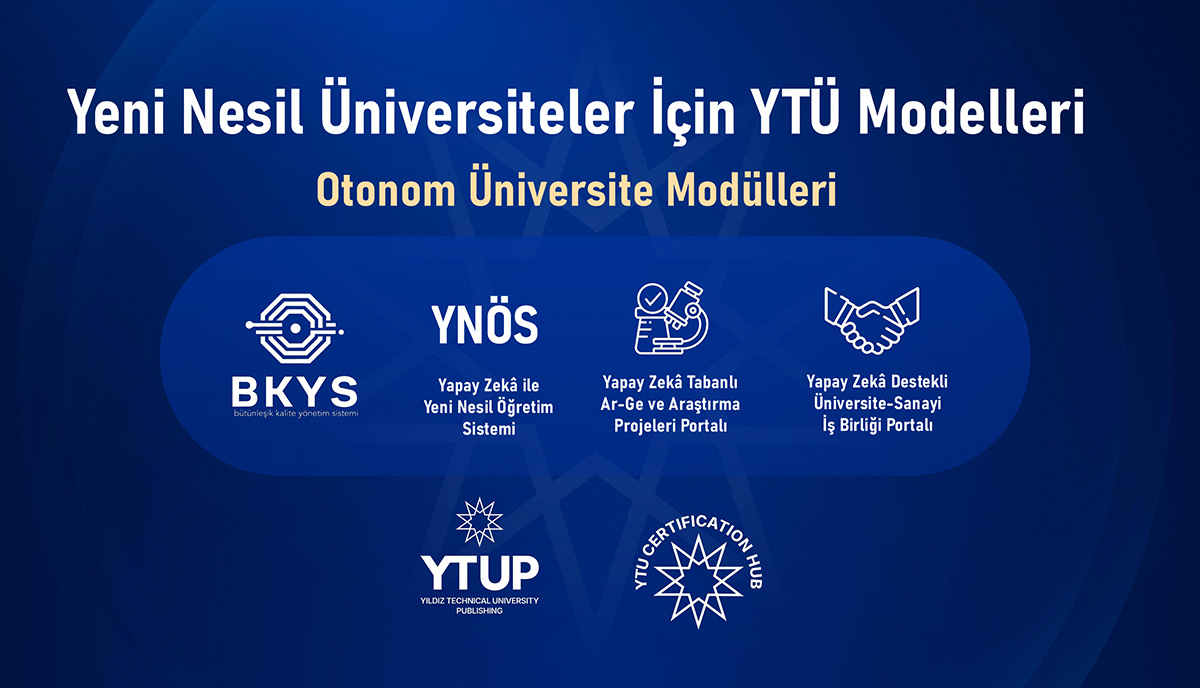
YTÜ’s Model for Transitioning to an Autonomous University
Prof. Dr. Karakaya described YTÜ’s AI-supported transformation efforts—carried out as part of its “new-generation university” approach—within the framework of “the transition from institutional intelligence to an autonomous university.”
The model is structured around four core modules: the Integrated Quality Management System (BKYS 2.0), the Next-Generation Teaching System (YNÖS), the AI-Based R&D and Research Portal, and the AI-Supported University-Industry Collaboration Portal.
Karakaya emphasized that the “autonomous university” approach does not mean replacing human decision-making with artificial intelligence, stating, “When we say ‘autonomous,’ we are not referring to a structure that is completely devoid of human involvement. Human decision-making is an essential component; however, the autonomous structure serves to assist us in the decision-making process.”
In YTÜ’s model, artificial intelligence is used in the stages of data analysis, risk identification, matching, and recommendation generation, while the final decision is left to experts and institutional decision-making bodies. This approach is defined by the principle “AI recommends, experts evaluate, the organization decides.”
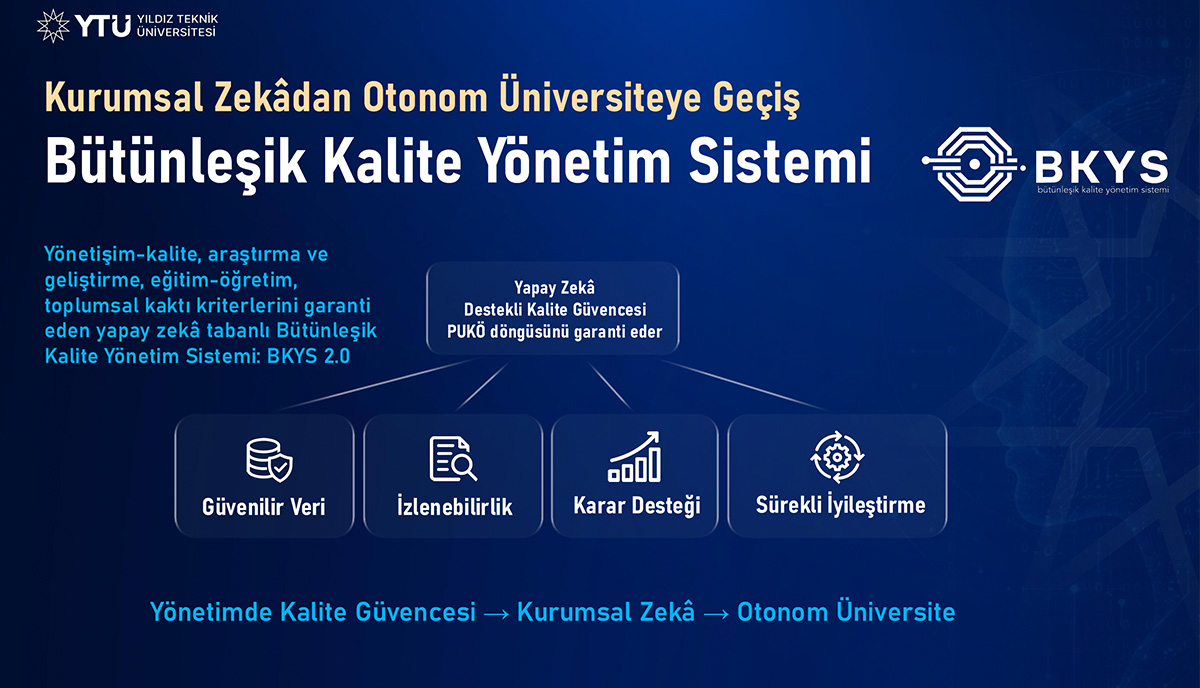
Integrated Quality Management System: BKYS 2.0
BKYS 2.0 forms the quality management component of the transition to an autonomous university. The system, which will enable the integrated monitoring of governance, education and training, research and development, and social contribution processes, links the data generated at the university to quality and decision-making processes.
At YTÜ, data generated across 72 different digital systems is consolidated on DataHub. BKYS 2.0 links this data to strategic goals, performance indicators, quality processes, and areas for improvement, providing AI-powered analysis and decision support.
The system aims to continuously monitor quality data, identify risks and areas for improvement earlier, support decisions with up-to-date data, and directly channel feedback into improvement processes. Decisions, criteria, and implemented improvements are documented to strengthen institutional memory and accountability.
YTÜ is also working to transform BKYS 2.0 into a modular structure that allows different universities to use it while preserving their own quality policies, data, and organizational structures. The system is planned to be rolled out to more than 40 universities.
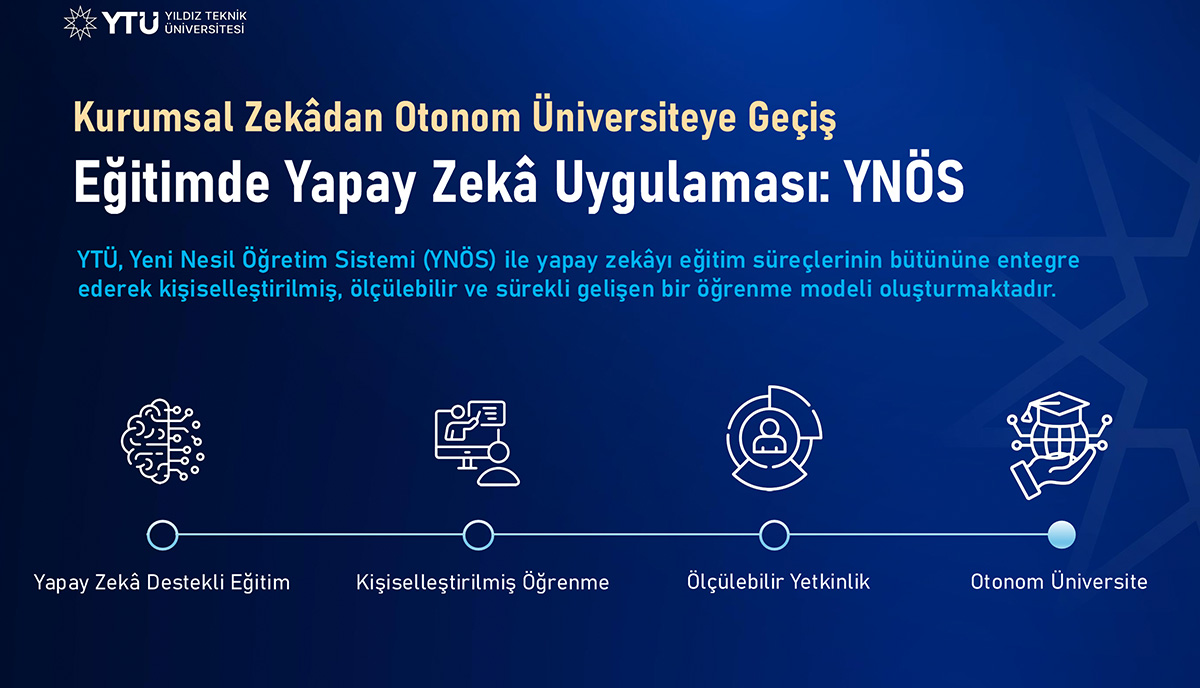
Artificial Intelligence in Education: The New Generation Teaching System
The educational component of YTÜ’s transition model to an autonomous university is formed by the Next-Generation Teaching System (YNÖS). YNÖS aims to integrate artificial intelligence into the entire educational process, personalize the learning experience, and track student learning outcomes in a measurable manner.
The system takes a holistic approach to the educational process, from the program to the course, and from course learning outcomes to the student’s level of achievement. Starting with the Turkish Higher Education Qualifications Framework and field-specific qualifications, the structure links program outcomes, course learning outcomes, teaching methods, and assessment and evaluation processes to the levels at which learning outcomes and program outcomes are achieved.
With this structure, the alignment of courses, teaching methods, and assessment and evaluation processes with the goals set in educational programs is monitored with the support of artificial intelligence, while the goal is to complete the PDCA cycle in education.
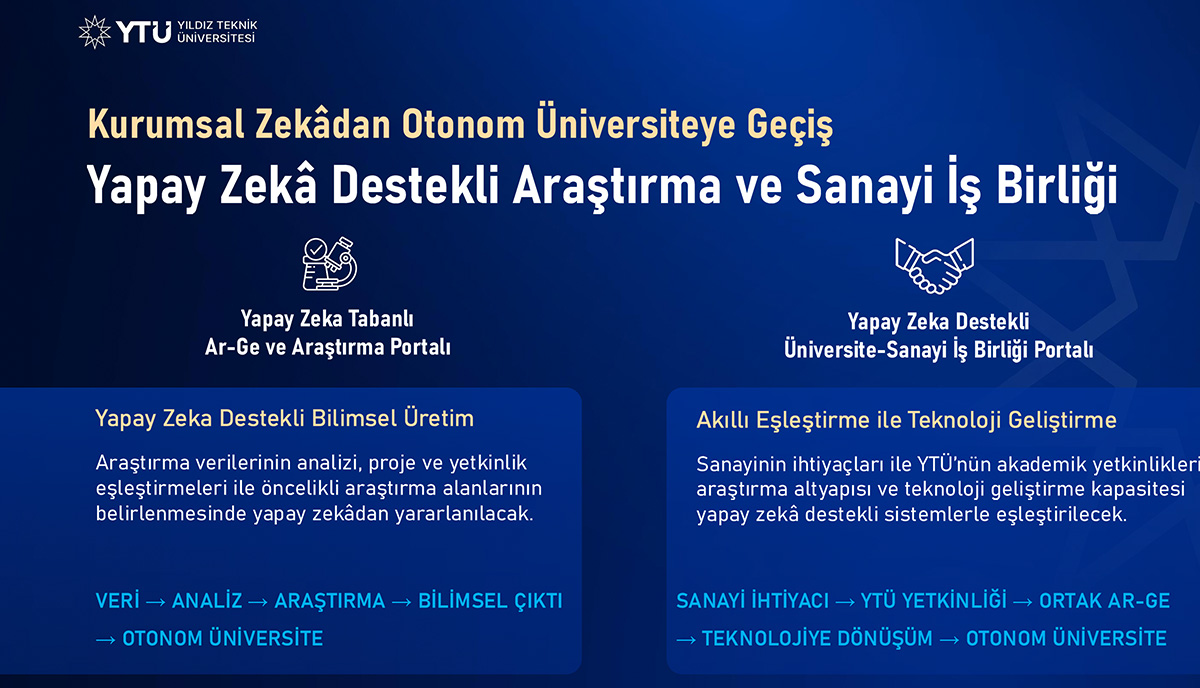
AI-Supported Research and University-Industry Collaboration
In YTÜ’s autonomous university model, there are also two separate AI-supported systems for research and university-industry collaborations.
The AI-Based R&D and Research Portal is designed to analyze research data, match projects with expertise, and identify priority research areas using artificial intelligence.
The AI-Supported University-Industry Collaboration Portal aims to match industry needs with YTÜ’s academic expertise, research infrastructure, and technology development capabilities. The goal is to more quickly connect industry needs with the relevant researchers, laboratories, research groups, or technology development capabilities.
These systems are expected to establish an integrated structure that spans from data to scientific output in research, and from industry needs to joint R&D and technology development processes in university-industry collaborations.
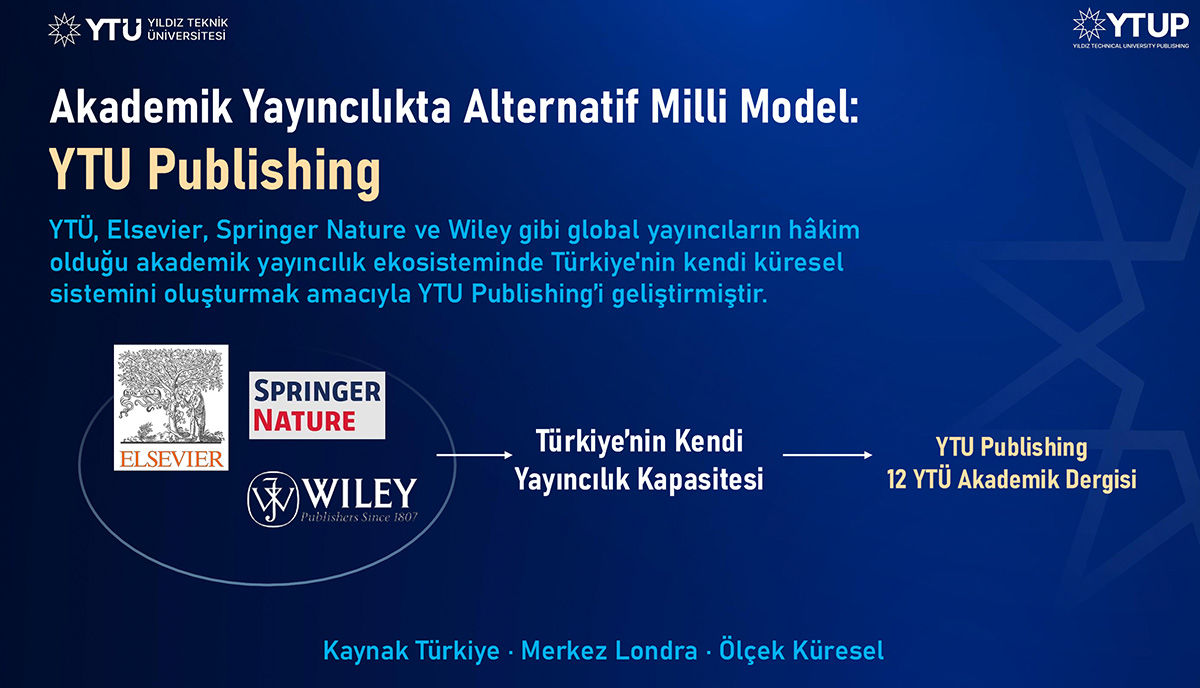
A New Model in Academic Publishing with YTU Publishing
Karakaya also discussed YTU Publishing, the academic publishing initiative developed by YTU, at the conference.
The goal with YTU Publishing is to establish a publishing ecosystem centered in Turkey that operates according to international standards and can be made available to various universities. The system, which began with 12 academic journals within YTU, is planned to be transformed into a structure managed from Turkey, headquartered in London, and operating on a global scale.
YTU Publishing is designed to provide an end-to-end publishing infrastructure for universities, faculties, institutes, and academic journals. The model includes journal management software, DOI, metadata, and archiving processes; AI-supported review, indexing, and quality consulting; Scopus and Web of Science submission management; editorial processes; ethical compliance; citation and metrics development; and national and international promotional activities.
Karakaya invited universities, faculties, institutes, and academic journal managers to join the publishing ecosystem to be established under YTU Publishing.
YTU Certification Hub: A Standard-Setting Certification Model
Another initiative YTU shared at the conference was the YTU Certification Hub. The goal is to establish a new Turkey-based structure in the field of international certification through this center.
The YTU Certification Hub’s approach goes beyond a certification model that merely verifies compliance with existing standards; it is designed to establish a system supported by digital infrastructure that contributes to the development of institutions’ competencies and capacities and is based on the development of new standards.
In the presentation, this approach was described as a transition from the current “follower” model to a “rule-setter” structure, with the goal articulated as a model that “does not merely apply standards but develops its own standards.”
The YTU Certification Hub encompasses eight main service areas: quality, environment, occupational health and safety, energy, information security, food safety, carbon verification, and new management systems.
GreenStars, developed using YTU’s scientific expertise, is positioned as one of the unique standard models within this framework. GreenStars aims to measure, evaluate, verify, and continuously monitor organizations’ sustainability and transformation performance.
Prof. Dr. Karakaya described the goal of the YTU Certification Hub as follows: “We want to transition from a structure that merely follows to one that sets the rules, and from one that merely applies standards to one that develops them.”
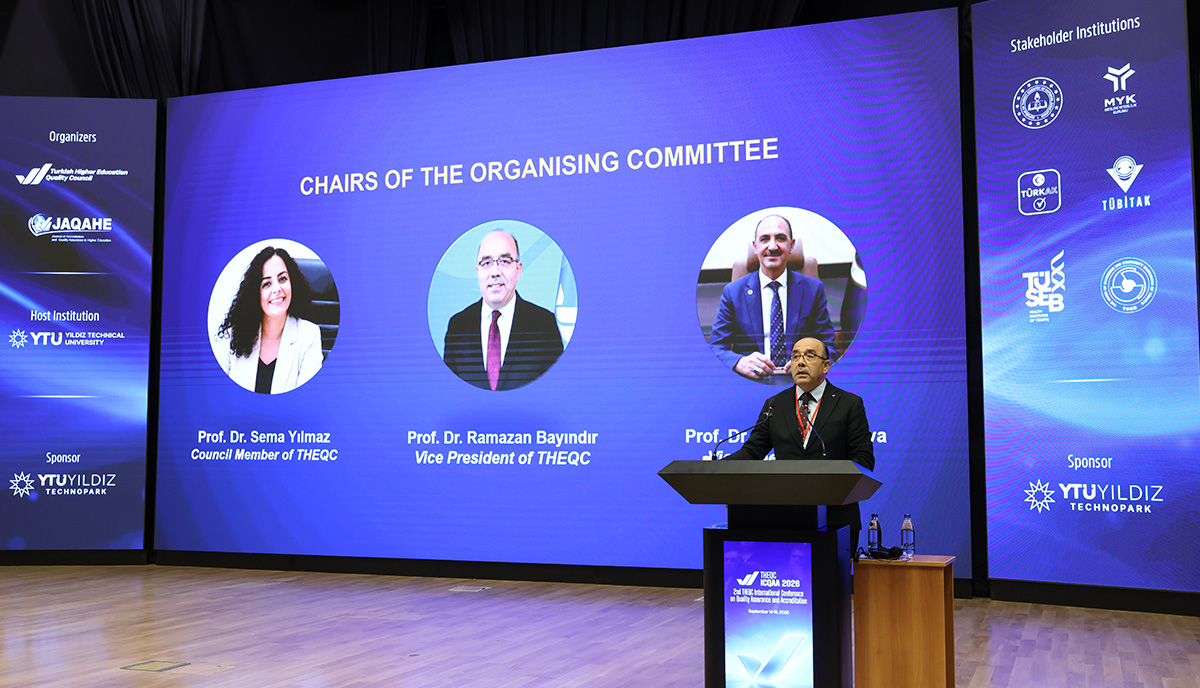
Prof. Dr. Ramazan Bayındır: “Quality assurance systems must not lag behind the transformation”
Speaking at the conference’s opening, YÖKAK Vice President Prof. Dr. Ramazan Bayındır emphasized that digital transformation in higher education is not limited to merely incorporating new technologies into education and research processes. Bayındır noted that the real issue is how to integrate artificial intelligence and digital transformation with the principles of quality, ethics, trust, transparency, academic freedom, and accountability.
Bayındır pointed out that artificial intelligence is becoming increasingly influential in many areas of higher education—from knowledge production to learning processes, and from research methods to institutional management—and said that quality assurance systems must also adapt to this transformation.
Highlighting the importance of quality assurance systems evolving into dynamic structures that understand and anticipate change and provide guidance to higher education institutions, Bayındır noted that the conference brought together experts and academics from different countries on a common scientific ground.
316 abstract submissions were received, and 259 were accepted
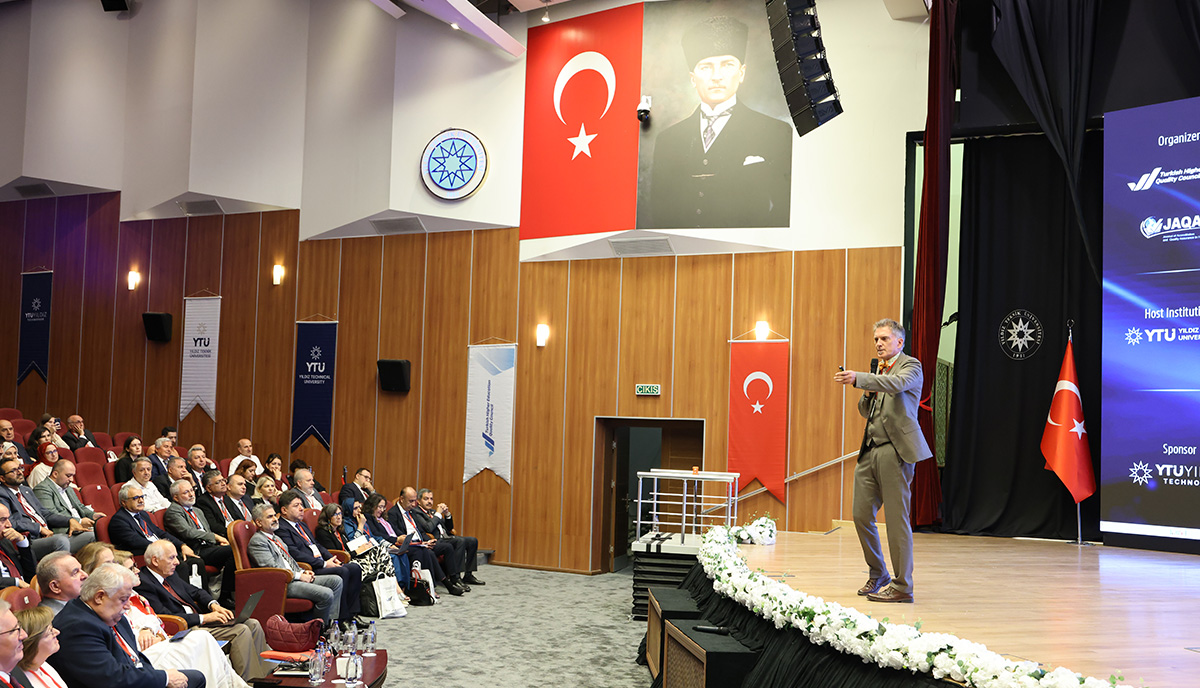
The conference drew significant interest from Turkey and various regions around the world. According to information provided by Bayındır, 316 abstract submissions were received, and following the scientific review process, 259 were accepted. The event was attended by over 1,000 participants, including more than 650 registered attendees, 259 presenters, and 120 invited guests.
Bringing together representatives of national and international quality assurance organizations, academics, higher education administrators, experts, and industry representatives, the conference served as a significant gathering where quality assurance in higher education was addressed on an international scale.
During the two-day conference, various topics related to quality assurance in higher education, accreditation, digital transformation, and artificial intelligence were discussed, and national and international stakeholders shared their knowledge and experiences.
Other News