Record number of applications to Star Explorers from the Balkans to China: 45 universities, 1,073 students, 211 teams
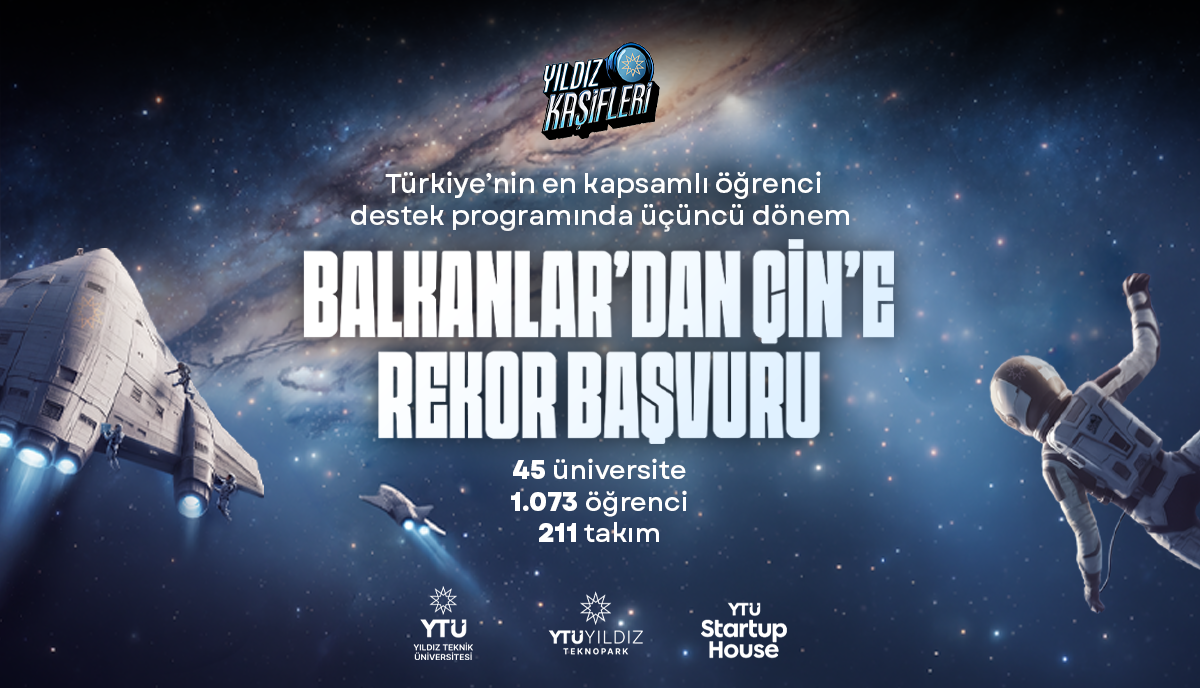
For the third season of “Yıldız Kaşifleri,” Turkey’s most comprehensive student support program, 211 teams—comprising 1,073 students from 45 universities—applied. With the number of teams increasing by 26.3 percent and the number of students by 29.3 percent compared to the previous season, Yıldız Kaşifleri has expanded its reach from Bosnia and Herzegovina to China.
Launched by Yıldız Technical University (YTÜ) to support students in turning their technology-focused ideas into projects and startups, Yıldız Kaşifleri set a new record by increasing the number of applications in its third cycle. Applications for the third season, accepted between September 28 and October 22, 2026, reached 211 teams and 1,073 students.
After eliminating applications that did not meet the eligibility criteria and removing duplicate entries, 197 teams will be invited to the jury evaluation. The teams’ areas of focus include unmanned aerial vehicles, software platforms, autonomous systems, and health technologies. Equipment needs topped the list of support requests.
An additional 44 teams and 243 students in one term
For the second phase of Yıldız Kaşifleri, which provides end-to-end support to student teams—from equipment to mentoring—830 students from 34 universities applied with 167 teams. In the third term, the total number of applications increased by 44 teams, and the number of participating students rose by 243. This change corresponds to a 26.3 percent increase in team applications and a 29.3 percent increase in the number of students. The number of universities represented also rose from 34 to 45, marking a 32.4 percent increase.
From Bosnia and Herzegovina to China...
Three of the 45 universities with students on the applying teams are located abroad. Students from the International University of Sarajevo in Bosnia and Herzegovina, the Hochschule Furtwangen in Germany, and the City University of Hong Kong in the Hong Kong Special Administrative Region of China were part of the applying teams. Thus, alongside students from 42 universities in Turkey, students from the Balkans, Europe, and East Asia also came together in the same program.
ITU, Koç, Galatasaray, Hacettepe...
Institutions participating from Turkey included Istanbul Technical University, Boğaziçi University, Istanbul University-Cerrahpaşa, Marmara University, Gebze Technical University, Istanbul University, Koç University, and Galatasaray University. The list of participating universities also includes Hacettepe, Gazi, Selçuk, Dicle, Karabük, Trakya, Sakarya, Nevşehir Hacı Bektaş Veli, and Antalya Science Universities.
According to the program’s application requirements, each team must include at least one YTÜ student. If there is only one YTÜ student on the team, that student must serve as the team leader. Students from different universities can work together in joint teams within these parameters.
UAVs, software, and autonomous systems lead the pack
Of the 197 applications deemed valid prior to the jury evaluation, 87 were in the fields of unmanned aerial vehicles, software, and autonomous systems. These three fields accounted for approximately 44 percent of the valid applications.
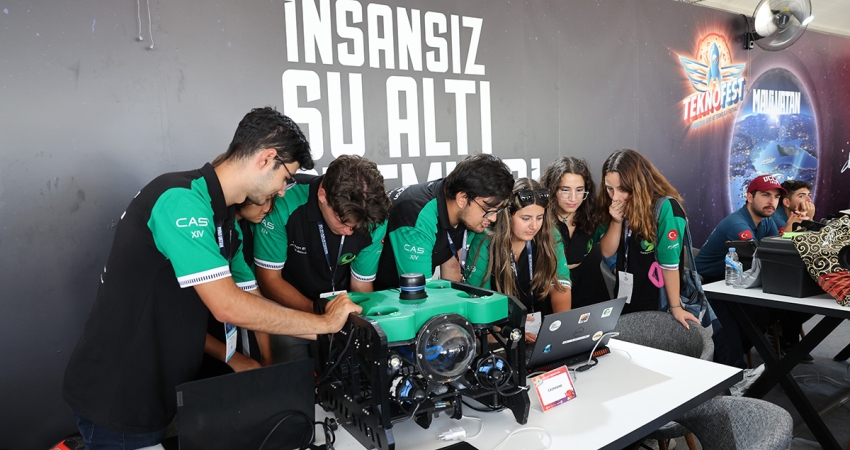
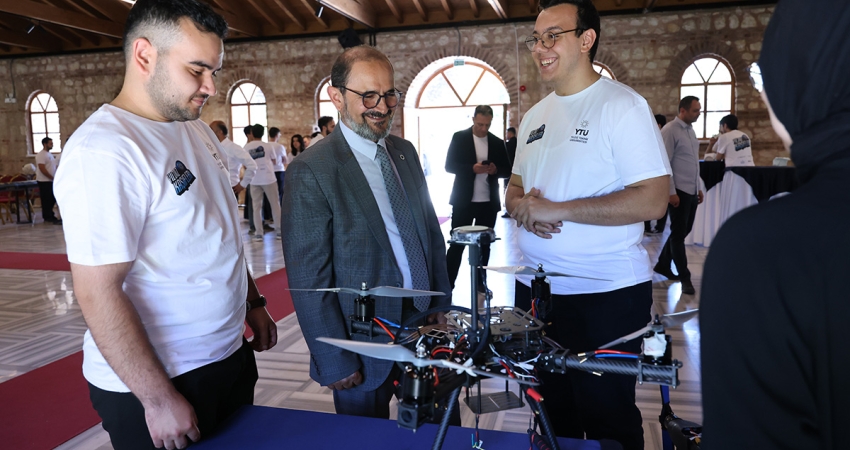
Unmanned aerial vehicles and drone technologies took the top spot with 33 teams, while 30 teams applied in the software platforms and software-as-a-service (SaaS) categories. The number of teams working on autonomous land, maritime, and robotic systems totaled 24.
Health technologies and the biomedical field followed with 21 teams. Eighteen teams applied in the energy and electric mobility sector, 13 in defense and air defense, and 11 in biotechnology and materials science.
There were nine teams each in agricultural technologies and educational technologies, and eight teams each in artificial intelligence and space and rocket technologies. Six teams were in the environment and sustainability sector, while seven applications were received from other fields.
Request for Equipment Support Stood Out
The support preferences of the applying teams highlighted the need for technical equipment during the project development process. Of the valid applications, 118 requested only equipment support, while 58 requested both equipment and competition support. The number of teams requesting only competition support was 21.
Thus, equipment support was included in the requests of a total of 176 teams. This figure corresponds to approximately 89 percent of the valid applications. The total number of teams requesting competition support reached 79.
Under the program’s equipment support category, machinery, equipment, and materials are provided, along with technical training and workshop facilities. Competition support covers airfare and lodging expenses for participation in national and international events. Each support package undergoes a separate evaluation process.
Universities were the most effective channel for outreach
University and institutional announcements were the primary source through which teams learned about “Star Explorers.” Of the 114 teams that submitted valid applications, all indicated they learned about the program through these announcements. This number accounts for approximately 58 percent of all applications.
The jury evaluation process will begin in November
In the new cycle, jury evaluations are scheduled to take place in November, with results expected to be announced between November 23 and 27, 2026. The support process, scheduled to begin in December with orientation and entrepreneurship training, is intended to continue in 2027 with online training, mentoring, and meetings. The program offers separate tracks for teams seeking to develop startups, as well as for project teams and student clubs.
Yıldız Kaşifleri provides support at various stages, from helping teams refine their ideas to producing prototypes, participating in competitions, and eventually incorporating their businesses and expanding into international markets. In addition to entrepreneurship training and mentoring, the program also includes office space in London, Amsterdam, and Dubai for eligible teams, as well as the opportunity to access investment support through StarBİGG.


Other News