Microplastics accumulating in the oceans find their way to our dinner tables through the food chain
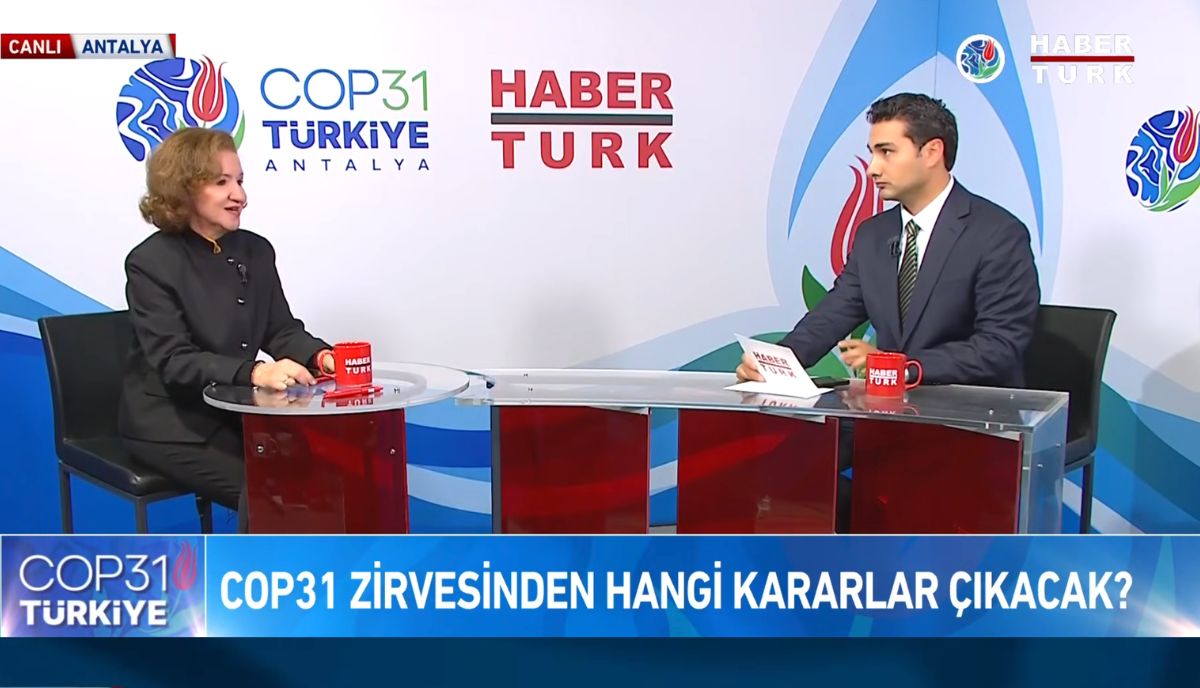
Our YTÜ Vice Rector, Prof. Dr. Güleda Engin, discussed the effects of microplastic pollution on marine ecosystems and human health during a live broadcast on Habertürk as part of COP31. Sharing findings from research conducted with support from TÜBİTAK, Engin highlighted the importance of advanced treatment technologies, noting that in some areas of the seas surrounding Istanbul, the number of microplastics per square kilometer exceeds 4 million.
Prof. Dr. Güleda Engin, Vice Rector of Yıldız Technical University (YTÜ), answered questions from Alihan Tok during a live Habertürk broadcast from COP31. Explaining the scale of microplastic pollution, its effects on marine ecosystems, and the treatment methods that need to be developed to protect water resources, Prof. Dr. Engin stated that plastic waste accumulates in the seas and reaches humans through the food chain.
As plastic production increases, so does pollution
Noting that plastics are cheap, easily accessible, and versatile, and thus present in nearly every aspect of daily life, Prof. Dr. Güleda Engin said that global plastic production, which stood at 2 million metric tons in the 1950s, has now reached 400 million metric tons. Pointing out that plastics can remain in nature for very long periods without decomposing, Engin emphasized that these materials accumulate in the oceans, leading to environmental pollution.
Noting that microplastics are consumed by marine life, which mistakes them for food, Engin explained that the biofilm forming on the surface of these particles can mislead the animals. Noting that this situation poses a significant threat to marine ecosystems and the food chain, Engin drew attention to the fact that microplastics can reach humans via marine life.
Microplastics are also being detected in the human body
Touching on research regarding the potential effects of microplastics and nanoplastics on human health, Engin noted that these particles have been detected in various parts of the human body. Recalling research findings indicating that microplastics are present in the placenta, blood, and cerebrospinal fluid, Engin stated that pollution is not limited to marine ecosystems alone.
Traditional treatment methods are insufficient
Noting that, in addition to microplastics polluting water sources, agricultural pesticides and chemical waste also pose a significant problem, Engin said that traditional treatment methods are insufficient to remove all of these pollutants.
“With current technology, it is not possible to remove microplastics using conventional systems,” said Prof. Dr. Engin, emphasizing the need to use advanced technologies in water treatment plants.
TÜBİTAK-Supported Research Measures Marine Pollution
Speaking about two projects conducted at YTÜ with TÜBİTAK support, Prof. Dr. Güleda Engin explained that one of the studies aimed to determine the amount of microplastics in the seas surrounding Istanbul. According to findings from the study, the number of microplastics per square kilometer exceeded 4 million in some areas. Prof. Dr. Engin noted that microplastic levels reached alarming levels, particularly in areas with high levels of social activity.
Engin also drew attention to the amount of microplastics in the water discharged from wastewater treatment plants into the seas, stating that large volumes of treated wastewater are discharged and that the failure to completely remove all pollutants during treatment processes can increase pollution in the seas.
Scientific research must be translated into practical applications at wastewater treatment plants
Noting that advanced oxidation methods and membrane technologies can be used to combat microplastic pollution, our Vice Rector Prof. Dr. Engin emphasized the importance of transferring scientific solutions developed at universities to full-scale wastewater treatment plants.
Stating that research findings must be put into practice and advanced treatment methods implemented at treatment plants, Engin said, “The work conducted at universities should not remain merely at the level of academic papers.” Engin noted that combating pollution is also crucial for the protection of water resources, given that water is reused after microplastics have entered rivers and seas.
Click here to watch the full COP31 broadcast on HaberTürk.