



























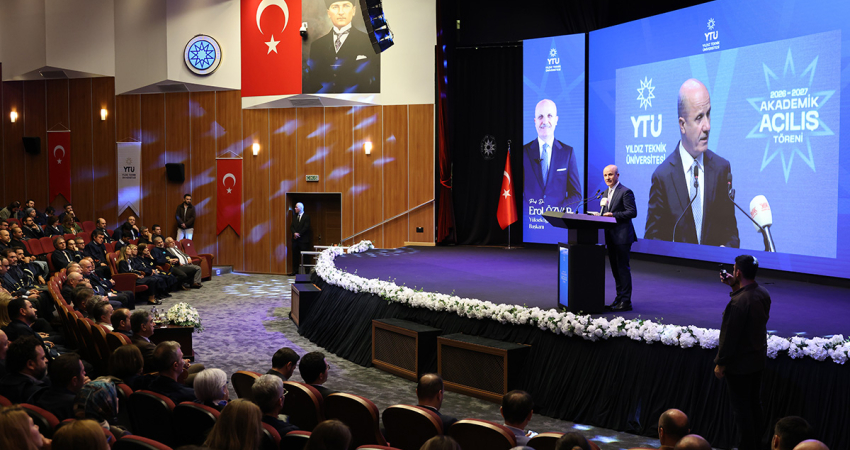
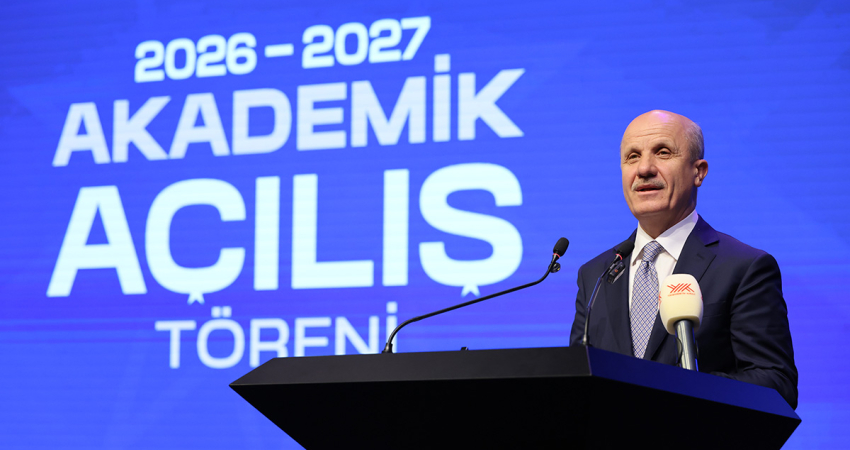
Prof. Dr. Erol Özvar, President of the Higher Education Council (YÖK), who delivered the first lecture at the academic opening ceremony: YTÜ could achieve a first
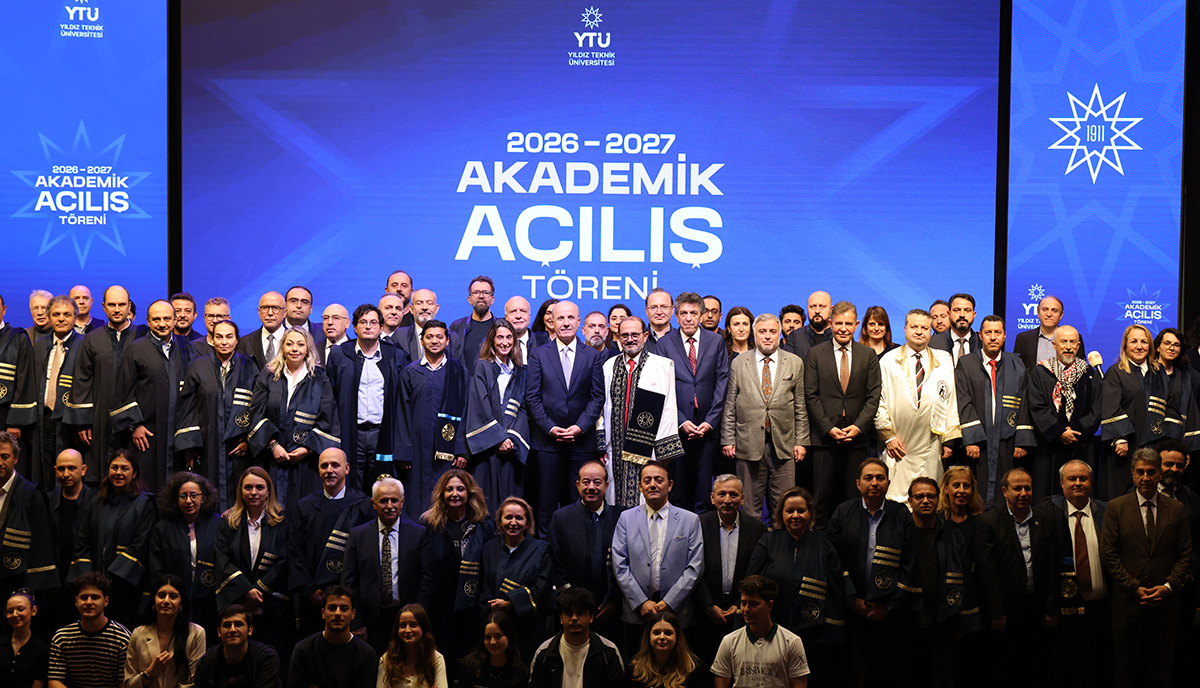
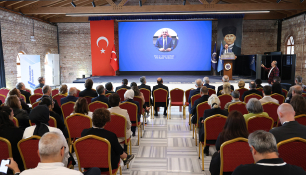
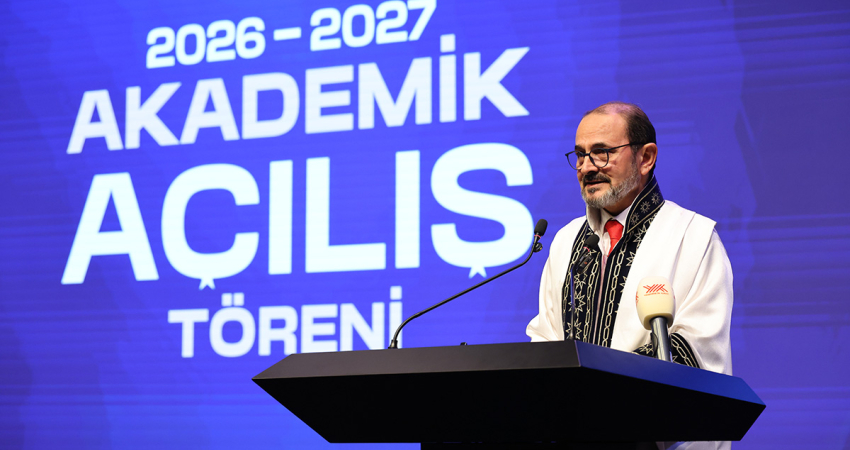
The Yıldız Technical University 2026–2027 Academic Year Opening Ceremony took place with an inaugural lecture delivered by Prof. Dr. Erol Özvar, President of the Council of Higher Education. Prof. Dr. Özvar highlighted the integration of artificial intelligence into educational processes in higher education, the renewal of assessment and evaluation methods, application-based learning, and the development of international scientific collaborations. YTÜ Rector Prof. Dr. Eyüp Debik also discussed the university’s research capacity, internationalization goals, AI-supported education, quality management initiatives, and projects related to university-industry collaborations.
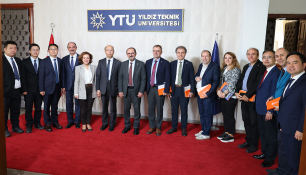
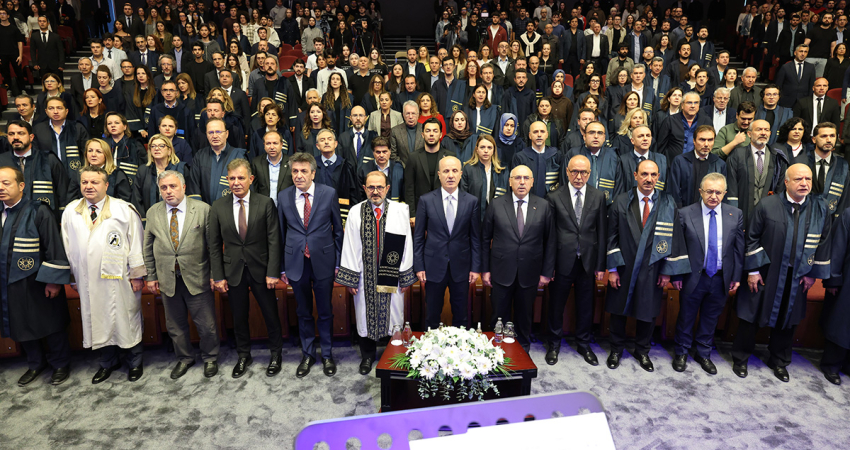
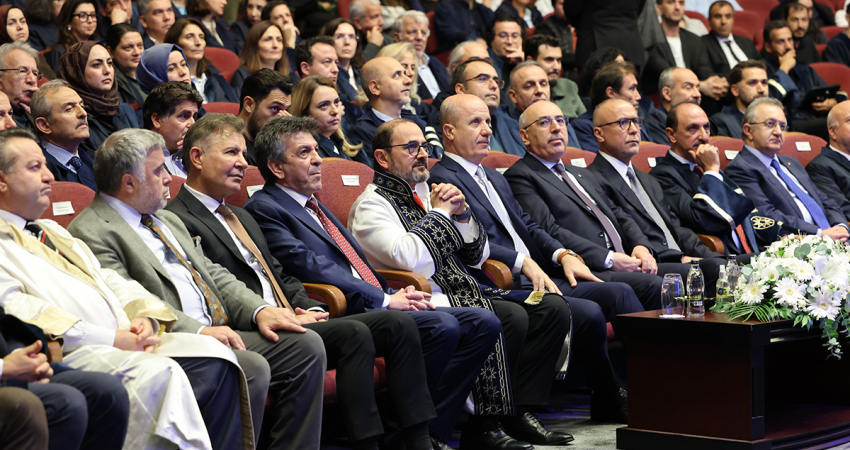
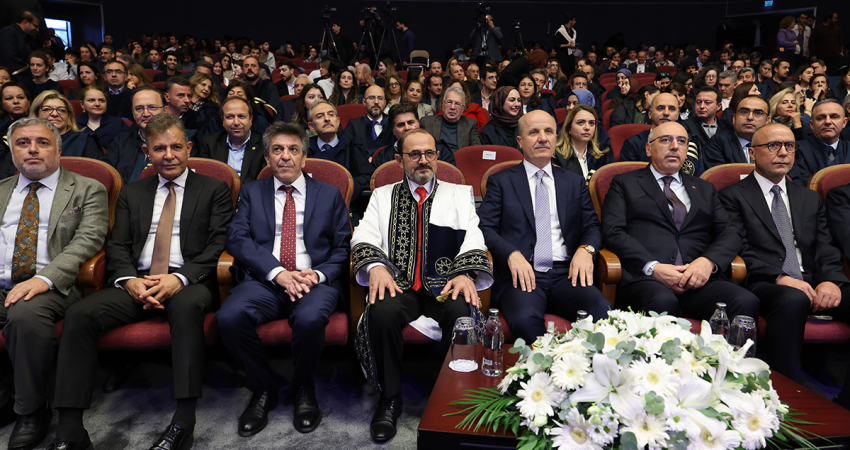
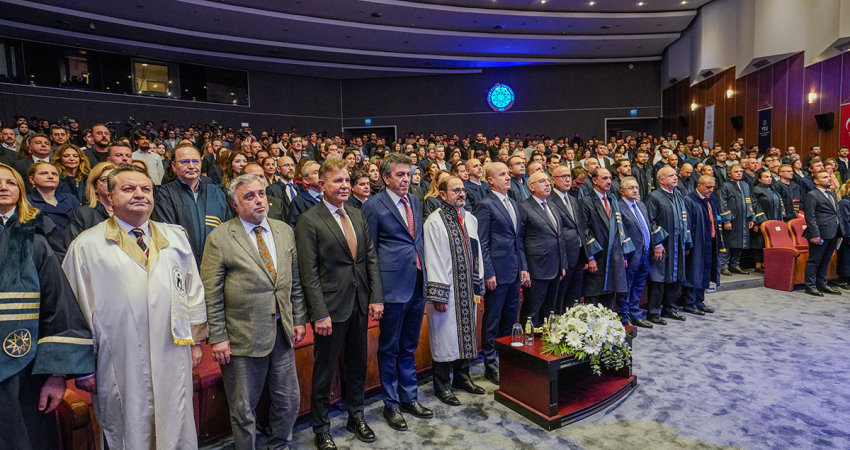
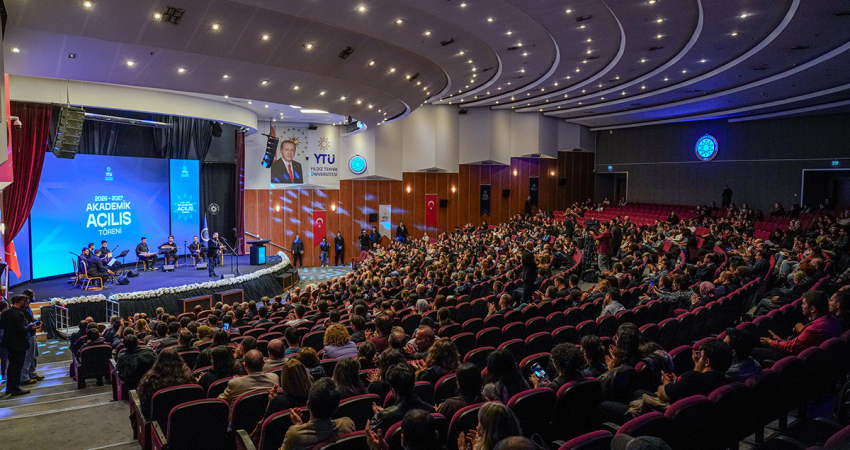
Our university’s 2026–2027 Academic Year Opening Ceremony was held at the Davutpaşa Congress and Culture Center. The ceremony was attended by Council of Higher Education (YÖK) President Prof. Dr. Erol Özvar; YTÜ Rector Prof. Dr. Eyüp Debik; YÖK Executive Board members Prof. Dr. Arif Bilgin and Prof. Dr. Mahmut Ak; Istanbul Deputy Governor Avni Kula; Esenler District Governor Süleyman Özçakıcı, Istanbul Kent University Rector Prof. Dr. Mehmet Necmettin Atsü, Istanbul Arel University Rector Prof. Dr. Ersin Göse, Marmara University Rector Prof. Dr. Mehmet Emin Okur, Kadir Has University Rector Prof. Dr. Ayşe Başar, and Esenler District Director of National Education Feyzullah Sert.Also present at the ceremony were YTÜ Vice Rectors Prof. Dr. Ahmet Göksel Ağargün and Prof. Dr. Vatan Karakaya, deans of faculties, directors of institutes, faculty members, and students.
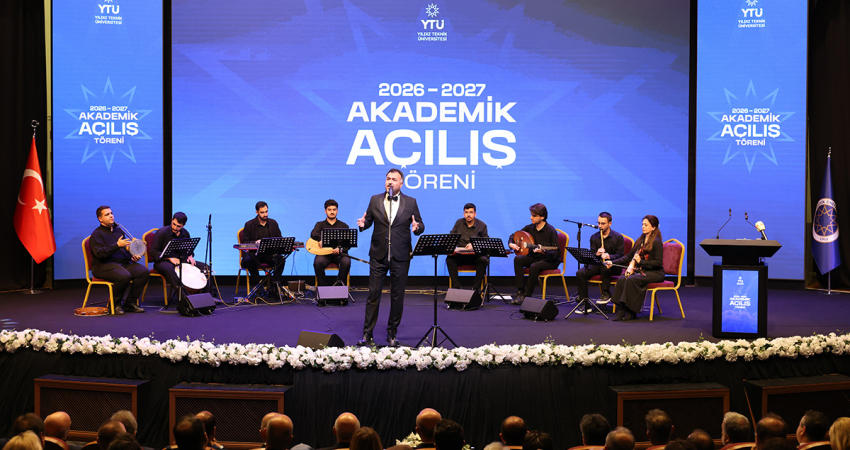
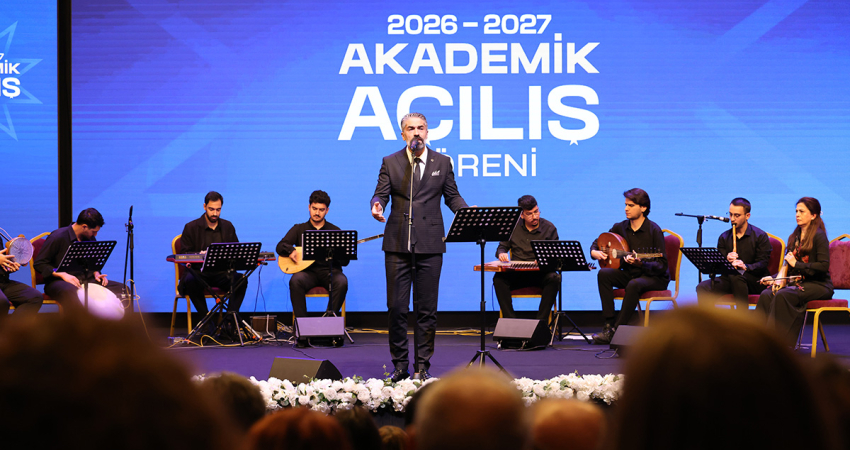
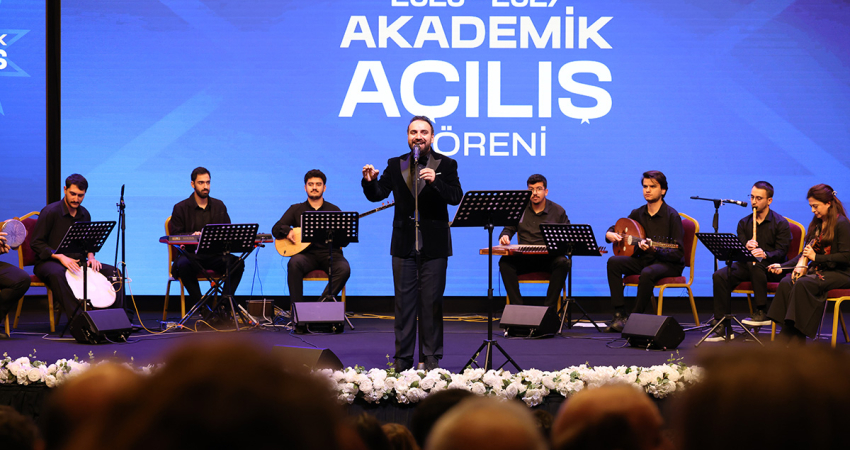
The program began with a musical performance by Dr. Emrah Uçar and Lecturer Dr. Levent Kaya from the Faculty of Art and Design, along with Lecturer Dr. Erdal Şahin from the Office of Corporate Communications.
YÖK President Özvar’s First Lecture at YTÜ Was on ‘Artificial Intelligence’
YÖK President Prof. Dr. Erol Özvar, who delivered the opening lecture at our university’s Academic Year Opening Ceremony, emphasized the need to reassess educational content and teaching methods in higher education in line with evolving technology and student needs. Noting that regular seminars and training sessions on artificial intelligence should be provided to faculty members and that user guides tailored to different disciplines should be prepared, Prof. Dr. Özvar stated that the ethical guidelines on the use of artificial intelligence published by YÖK provide a guiding framework for these efforts.
“We need to ensure transparency in the use of artificial intelligence”
Prof. Dr. Özvar noted that AI training should not be limited to faculty members alone, and highlighted the importance of students using these tools with a sense of responsibility for learning and academic integrity. Noting that students can utilize artificial intelligence to develop different perspectives, generate questions, and plan their work processes, Özvar stressed that the responses obtained must be critically examined and the results justified through personal reasoning.
Stressing that the use of artificial intelligence in universities must be brought into a more academic, disciplined, and productive framework, Özvar stated that these tools should not be limited to individual and implicit learning processes but must be addressed transparently. Özvar stated, “There is tremendous potential, and this potential should not be explored behind closed doors. On the contrary, I believe we must bring it to light and ensure transparency.”
“Yıldız Technical University Can Be a Pioneer”
Noting that Yıldız Technical University could play a pioneering role in this field, Özvar expressed that integrating artificial intelligence tools into various disciplines and educational programs could increase productivity. Prof. Dr. Özvar said the following:
“I’m not telling them what to do, but our faculty members who use these tools need to ensure that AI, experience, and learning processes are brought into a more academic, more disciplined, and more productive framework through this hands-on approach. There is tremendous potential, and this potential should not be researched in secret. We shouldn’t just try to discover it.
On the contrary, I believe we must bring this to light and make it transparent. In this regard, Yıldız Technical University may be the first among our other universities to achieve this milestone.
I believe that by integrating this process—through more technical, disciplined, and structured courses—with both faculty and students, they can further increase their productivity.”
“If a course begins and ends only in the classroom, then that course is incomplete”
Noting that the role of faculty members in higher education needs to be reevaluated, Özvar pointed out that students can access course content and seminars at universities around the world through digital tools. Stating that the education offered at universities must also be rethought in the face of this change, Özvar said, “What we call a course is not a process that begins and ends in the classroom. If a course begins and ends only in the classroom, then that course is incomplete.”
Pointing out the importance of faculty members’ scientific knowledge, personal experience, and professional expertise in education, Özvar said, “One of the things that artificial intelligence cannot provide—or perhaps cannot provide at this time—is the unique, exceptional experience or expertise that our professors possess. “This is where we need to start,” he said.
Noting that students’ hands-on learning and collaboration with faculty members strengthen the learning process, Özvar said that learning by doing boosts students’ self-confidence and desire to create. Referring to the TEKNOFEST example, Özvar said, “A child who begins to learn by doing develops self-confidence. As their self-confidence grows, they become more successful and gain the courage to do more.”
Özvar emphasized that universities should give greater priority to hands-on and project-based learning and begin their efforts in this regard without waiting for new guidance from YÖK.
“International scientific collaborations strengthen universities’ capacity”
Noting that internationalization is an important part of educational and research activities in higher education, Özvar stated that universities must develop their relationships with higher education institutions, institutes, and research networks in different countries.
Highlighting the contribution of international interaction to academic productivity, Özvar said, “We observe that our faculty members and universities that are open to international interaction and visible on the global stage are more successful, more productive, and more diligent.”
Noting that universities must increase their collaborations with institutions in the West and the East, develop dual-degree programs, support student and faculty mobility, and conduct joint scientific research, Özvar expressed the importance of interaction with different research cultures in the following words:
“Engaging with the higher education expertise and experience of different countries is, so to speak, an interaction that will strengthen us and boost our resilience. Intellectual vitality and diversity will also increase through this interaction. Isolation, on the other hand, leads only to intellectual stagnation.”
Özvar noted that attracting international students and academics to universities is also a crucial part of this process, highlighting the importance of YTÜ inviting international doctoral candidates to join its ranks. “We must be able to invite international student candidates to pursue their doctorates at Yıldız Technical University,” said Özvar, adding that there is a need to increase the number of scientific publications prepared through international partnerships and to plan new English-language programs at the graduate level.
The School of Artificial Intelligence and Data Analysis Now Includes YTÜ
Referring to efforts aimed at developing Turkey’s talent pool, Özvar announced that the School of Artificial Intelligence and Data Analysis has been expanded this year to include YTÜ. He noted that the platform—which is a nonprofit organization aimed at providing education to diverse segments of society—is intended to reach a broader audience through online and interactive training.
Noting that approximately 30,000 people participated in the program over two semesters last year, Özvar said that YTÜ would contribute to the training through its sustainability module. Özvar invited the university’s faculty and students to take advantage of the platform.
Rector Debik: “We prioritize the quality of education and the development of our students”
Delivering the opening remarks at the ceremony, YTÜ Rector Prof. Dr. Eyüp Debik highlighted the responsibilities of universities toward education, science, and humanity at the start of the new academic year. Referring to the destruction suffered by educational institutions and universities in Gaza, Debik stated that defending the right to education and human dignity are among the responsibilities of universities. Debik paid tribute to the students, academics, and others who lost their lives in Gaza and expressed his hope that those who survived would find peace as soon as possible.
Highlighting the policies of YÖK President Prof. Dr. Erol Özvar—which prioritize quality in higher education, international prestige, and an entrepreneurial university approach—Debik noted that the goal of ranking among the world’s top 100 universities has guided YTÜ’s efforts. Debik thanked Özvar and YÖK for the support provided to universities.
Projects and funding are being increased to strengthen research capacity
Providing information on YTÜ’s interdisciplinary research activities, Debik said that 61 interdisciplinary research groups bring together different fields of expertise with the goal of developing technology and generating solutions to problems. Noting that the university also supports these efforts with its own resources, Debik stated that the university aims to reach a project budget of 500 million lira by 2026, adding that research is being conducted in various fields ranging from artificial intelligence to biotechnology, and from wastewater management to materials science.
Noting that the university is continuing its work on 223 national projects, Debik reported that the budget for the Research Universities Support Program (ADEP) has increased from 45 million lira in 2024 to 98.3 million lira in 2026. He emphasized that they are working to achieve results with high scientific impact and to develop solutions that address the country’s needs.
Highlighting the importance of support for scientific research, Debik noted that the Scientific Research Projects (BAP) budget has more than doubled in two years, and that the grant provided to encourage high-quality research has been increased from 5,000 lira to 60,000 lira.
International Academic Collaborations Are Being Strengthened
Noting that YTÜ has expanded its academic collaboration network to include over 300 partner universities and more than 700 agreements as part of its internationalization goals, Debik stated that these relationships contribute to joint research and scientific output.
Referring to the university’s efforts regarding international student mobility and the Erasmus program, Debik noted that over the past three years, approximately 2,000 students were provided with opportunities for education and internships abroad, while 460 international students were hosted at YTÜ.
Discussing efforts to transform scientific research into innovations and economic value, Debik noted that YTÜ ranks first in Patent Cooperation Treaty (PCT) applications and has maintained its top position in European patent applications for the past three years. He stated that ranking first in 10 out of 20 technology fields demonstrates that success is spreading across various disciplines.
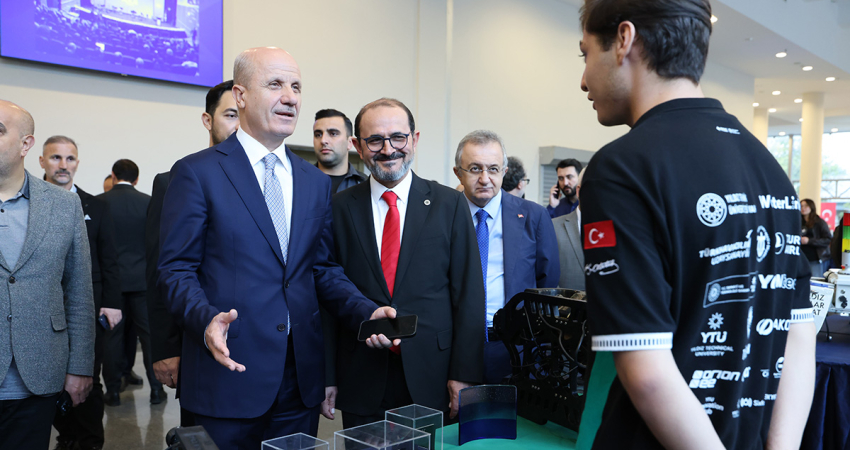
Yıldız Explorers and TEKNOFEST successes showcase young people’s production capacity
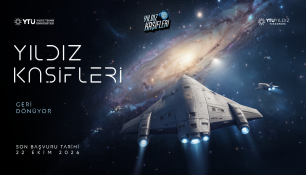
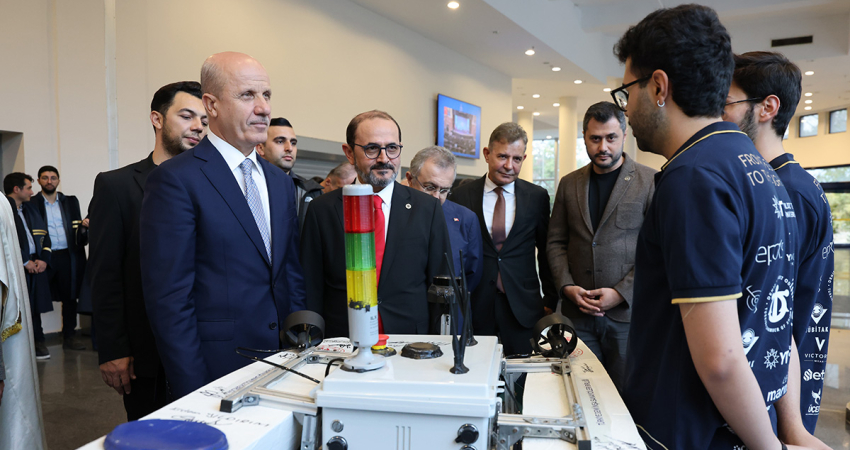
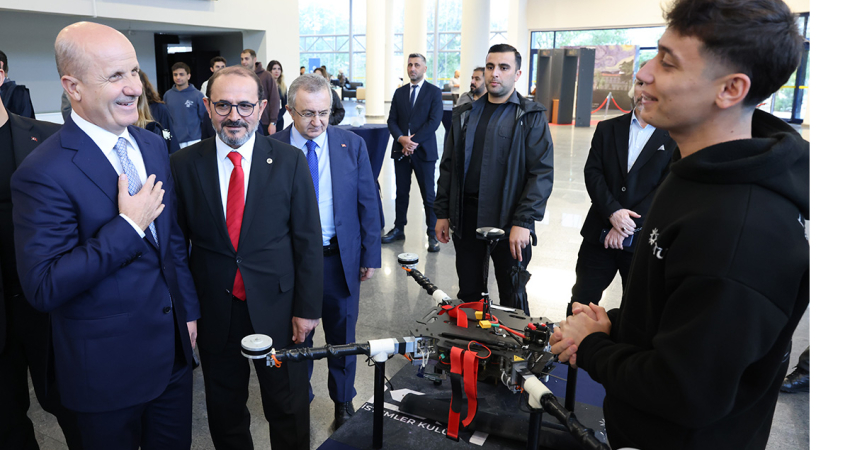
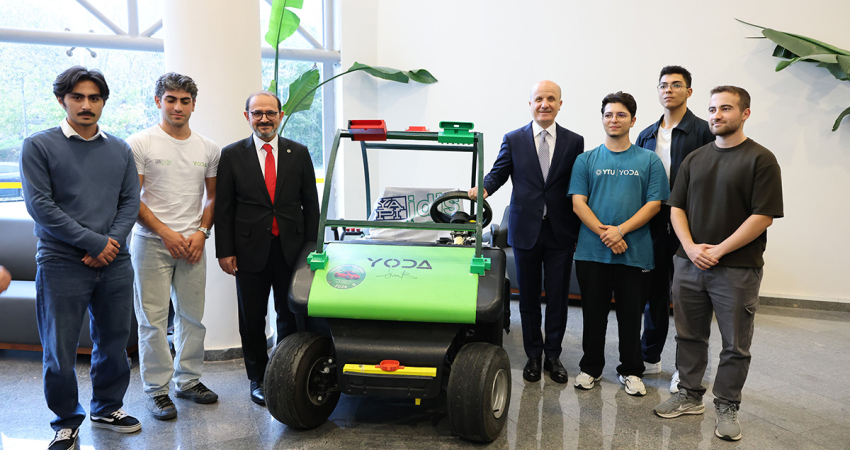
Referring to the Yıldız Explorers program, launched to support students in turning their ideas into projects, Debik said that students receive support at various stages, ranging from material assistance to mentorship. He noted that applications for the third round of the program—which was opened to students from all universities in its second year—are currently ongoing.
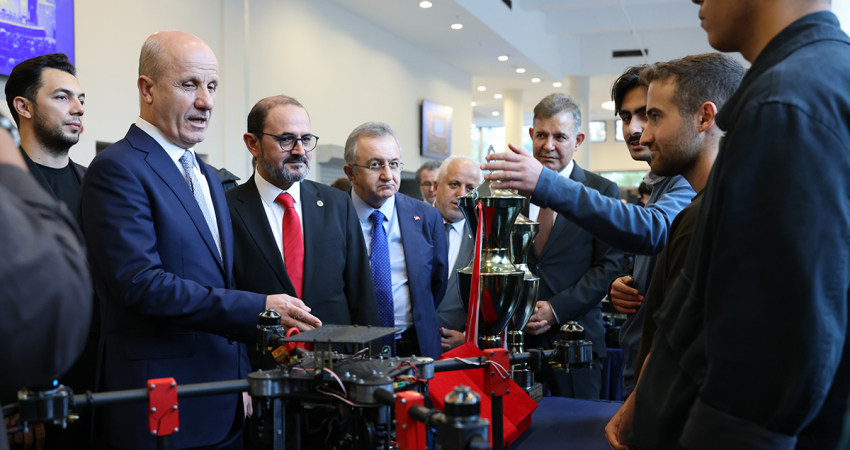
Debik also highlighted the successes achieved by YTÜ students in international technology competitions, noting that technology teams have won 17 trophies and four special awards in 11 countries over the past two years, and have secured 12 first-place finishes and numerous other awards at TEKNOFEST.
Emphasizing the importance of students learning through experimentation and creation, Debik said, “We provide the support; the success comes from our students.”
Artificial Intelligence-Supported Education and Quality Management Initiatives at YTÜ
Noting that artificial intelligence has transformed the ways in which knowledge is generated and learned, Debik stated that this transformation necessitates the renewal of education and teaching processes. He explained that, in line with this, the university is conducting work on the Artificial Intelligence-Based Integrated Quality Management System, the Next-Generation Teaching System (YNÖS), research projects, and a university-industry collaboration portal.
Noting that under the Integrated Quality Management System (BKYS 2.0), 72 software applications are integrated with one another via DataHub to enable the monitoring of processes using shared and reliable data, the identification of shortcomings, and the implementation of improvements, Debik summarized the system’s fundamental approach “Artificial intelligence suggests; institutional wisdom decides.”
Debik explained that the New Generation Teaching System addresses the entire process—from the preparation of educational materials to program outcomes and course learning objectives, and from teaching methods to assessment and evaluation—and stated that the goal is to track the extent to which students achieve the targeted knowledge and skills and to use the results to continuously improve education.
Debik emphasized that while strengthening quality assurance in education with the support of artificial intelligence, the relationship between faculty and students will remain central.
New Goals with YTU Publishing and the Certification Hub
Referring to YTU’s efforts in the field of academic publishing, Debik noted that through YTU Publishing, established in London, they aim to bring Turkey’s scientific expertise to the international academic publishing arena. Explaining that the structure—which began with the university’s 12 academic journals—combines editorial consulting and promotional services, Debik noted that the goal is to make this model available to universities in Turkey and around the world.
Debik also noted that the Certification Hub initiative aims to utilize Turkey’s academic expertise in the development of international standards, adding that the center will provide audit, compliance assessment, and certification services to institutions. Debik also mentioned that they are working on the GreenStars management system, which integrates green transformation, sustainability, and digitalization, and explained that the system aims to evaluate institutions’ energy and resource usage as well as their digital processes based on common indicators.
“Yıldız Technopark Transforms Research into Economic Value”
Highlighting the role of university-industry collaboration in transforming scientific knowledge into economic value, Debik noted that Yıldız Technopark creates opportunities for academics, industrialists, and entrepreneurs to collaborate on innovation.
Noting that they support the transformation of ideas into technology and the bringing of products to market through campuses at four different locations and five international offices, Debik added that the Industrial Design and Prototyping Center also offers product development opportunities for students, academics, entrepreneurs, and industry representatives.
YTÜ is strengthening its international academic staff to achieve its goal of ranking among the top 100
Noting that they are addressing research quality, internationalization, and academic reputation collectively in line with the goal of ranking among the world’s top 100 universities, Debik reported that criteria for academic appointments and promotions have been updated to encourage high-quality publications and international research.
Providing information on efforts to recruit foreign faculty members, Debik said that the number of foreign faculty members, which was recently nine, has been increased to 21, and that approval from the Higher Education Council (YÖK) is pending for 18 more faculty members to begin their positions. He stated that the university aims to recruit 50 foreign academics by the end of the year and to maintain this number at a minimum of 150 in the coming years.
Debik noted that they plan to raise the 40,000 lira grant provided to doctoral students to $1,000 and added that they also anticipate providing a $1,100 grant for postdoctoral researchers. Debik reported that the signing process for bilateral and joint graduate programs developed with Azerbaijan is ongoing, and noted that discussions are continuing regarding the establishment of bilateral and joint programs with the U.S., France, Poland, and China.
Debik said that providing up to 150,000 lira in support to researchers for 100 open-access publications accepted for publication in journals ranked in the top 1 percent globally, and the completion of digital campus initiatives, are among the priorities for the new term.
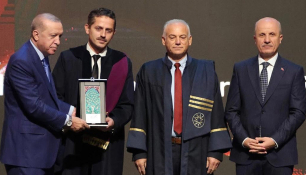
At the conclusion of the program, YTÜ Rector Prof. Dr. Eyüp Debik presented Prof. Dr. Erol Özvar, Chairman of the Higher Education Council, with a work of calligraphy—one of the finest examples of the art form—symbolizing Yıldız Technical University.
Our university’s 2026–2027 Academic Year Opening Ceremony was held at the Davutpaşa Congress and Culture Center. The ceremony was attended by the President of the Council of Higher Education (YÖK), Prof. Dr. Erol Özvar; YTÜ Rector Prof. Dr. Eyüp Debik; YÖK Executive Board members Prof. Dr. Arif Bilgin and Prof. Dr. Mahmut Ak; Istanbul Deputy Governor Avni Kula; Esenler District Governor Süleyman Özçakıcı, Istanbul City University Rector Prof. Dr. Mehmet Necmettin Atsü, Istanbul Arel University Rector Prof. Dr. Ersin Göse, Marmara University Rector Prof. Dr. Mehmet Emin Okur, Kadir Has University Rector Prof. Dr. Ayşe Başar, and Esenler District Director of National Education Feyzullah Sert.
Other News