Semih İrteş spoke at YTÜ about his artistic journey, which began in Süleymaniye
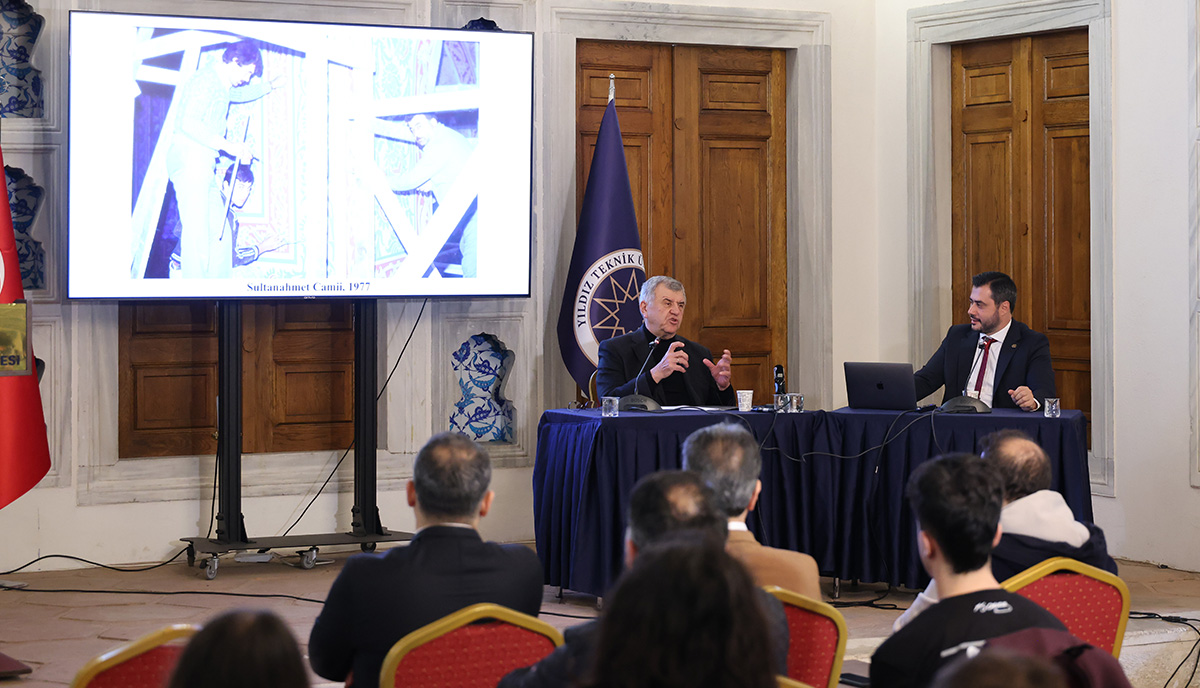
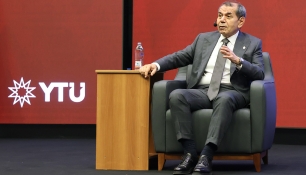
Semih İrteş, a YTÜ graduate, architect, and miniaturist selected as one of UNESCO’s “Living Human Treasures,” was a guest on the “Conversations in Honor of the Masters” segment of the “Under the Stars: Culture and Art” series. İrteş shared how the penwork he learned from his father, Süheyl Ünver’s illumination classes, and his architectural education have influenced his designs.
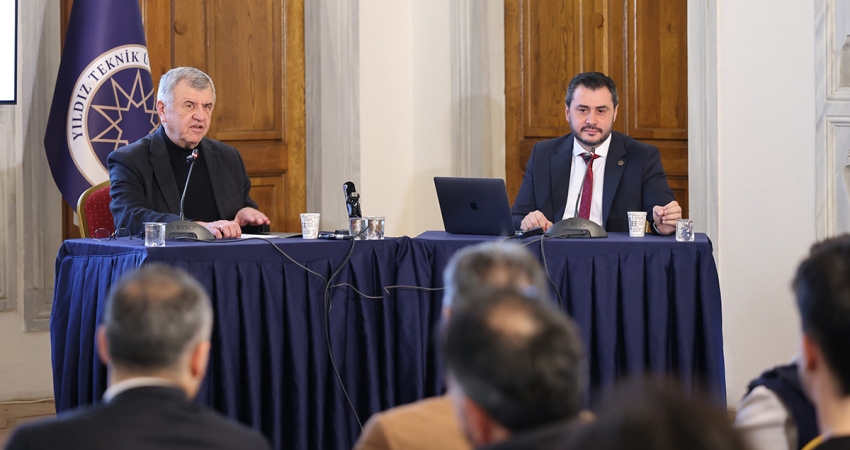
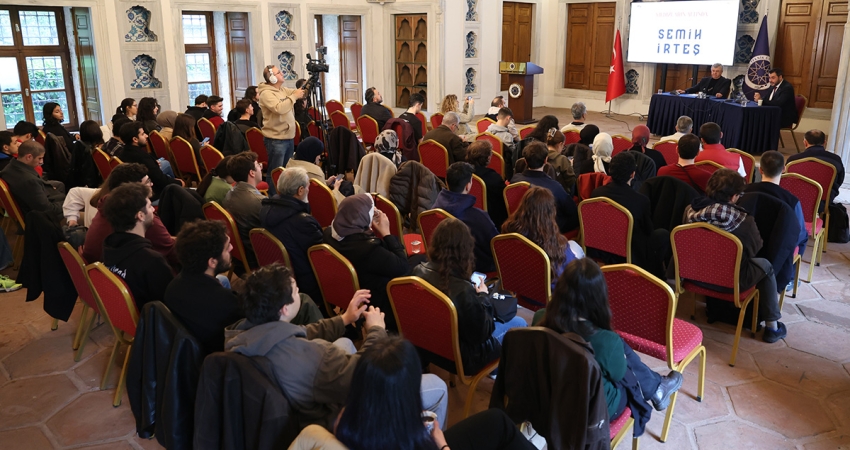
On the “Culture and Art Under the Stars” program, we hosted Semih İrteş, a YTÜ graduate, architect, and illuminator who is listed on UNESCO’s “Living Human Treasures” program’s Turkey list. The discussion, held at the Otağ-ı Hümayun on the Davutpaşa Campus, was moderated by YTÜ Cultural Services Branch Director Lecturer Uğur Taşatan.
İrteş’s first encounter with penwork dates back to when he was six or seven years old and visited the Süleymaniye Mosque, where his father, Sabri İrteş, worked. Part of his childhood was spent amidst the restoration work at the Süleymaniye Mosque and Topkapı Palace. The Harem Quarter and the Hünkar Sofası of the palace were among the places where he learned his craft alongside his father.
Design and Archives in Süheyl Ünver’s Classes
In 1973, İrteş began attending Süheyl Ünver’s illumination classes at the Cerrahpaşa Nakkaşhane. In Ünver’s classes, he learned not only how to draw designs but also how to document the works he studied and archive his drawings. Irteş, who also recommends this practice to young people, said, “The computer isn’t everything. One day the power might go out, or something else might happen. It’s important to see the artwork, observe things on paper, and take notes.”
Recalling the certificate of authorization Ünver granted her after evaluating her work, İrteş described this tradition in two sentences: “You don’t ask the teacher for a certificate of authorization. The teacher grants it.”
Architecture Education Shaped His Miniature Art Designs
While preparing for college, İrteş had considered studying art history but chose architecture under the guidance of Prof. Dr. Nurhan Atasoy. In 1975, he began his studies at what was then known as the Istanbul State Academy of Engineering and Architecture—now Yıldız Technical University. İrteş explained how the design discipline he acquired in architecture was reflected in his tezhip work with the following words:
“The discipline of architecture is something entirely different. How is design created? Where does it begin? How does it maintain continuity throughout the process? It is a crucial discipline that shaped my understanding of design in the art of tezhip and trained me in this field. This is the greatest benefit I gained from architecture.”
The Scale of a Design: From a Book Page to a Mosque Dome
İrteş explained the difference between tezhip and architectural penwork in terms of the viewing distance. While a pattern on a book page is examined up close, a pattern on a mosque dome is viewed from much farther away. This difference affects the entire design, from the size of the motifs to the choice of colors.
Citing examples from his work on the Adana Sabancı Central Mosque, the Tokyo Mosque, and projects in Chechnya, İrteş said he reinterprets traditional motifs using different materials:
“I cannot break away from tradition. I change the material to alter the visual appearance. I try to do things that aren’t done exactly as they are in tradition. The motifs are rooted in the essence of tradition, but the designs are different—the concepts are different.”
Irteş also explained the title given to him by art historian Filiz Çağman, who works at Topkapı Palace, in terms of this design responsibility, saying, “Nakkaş is a title given to the person who creates the design.” Recalling the production tradition in Ottoman nakkaşhanes—which ranged from book illumination to wood carvings and ceramic patterns—İrteş noted that following the establishment of the Sema Nakışhanesi in 1991, in 2008, they brought together book arts and architectural ornamentation under the umbrella of the Nakkaş Decorative Arts Center.
Penwork is learned on-site
According to İrteş, tezhip can be learned in a workshop under the guidance of a master. In architectural penwork, however, the apprentice must work on the actual structure where the design will be applied. In this way, the apprentice sees the scale of the structure firsthand and learns how the master uses the materials under various conditions.
At the end of the interview, addressing the young people, İrteş shared the following words from his teacher, Süheyl Ünver:
“Art, when done with love, gives life to a person. Look, if you do it with love, see how it makes you happy, how it motivates you—it takes you away from all your sorrows and troubles and brings you peace. But if you want to achieve results, you must also dedicate your life to it.”
Architect and Miniaturist Semih İrteş Visits Our Rector
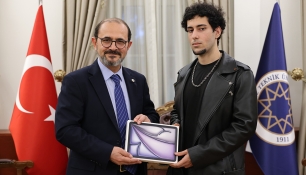
Following the “Conversations in Honor of the Masters” event, architect and calligrapher Semih İrteş and his daughter, Sevgi İrteş—a graduate of our Department of Environmental Engineering and a miniaturist—visited our Rector, Prof. Dr. Eyüp Debik.
During the visit, Semih İrteş presented our Rector, Prof. Dr. Debik, with a work he had reinterpreted using the Kufic and Celi Muhakkak scripts, inspired by the exquisite examples of calligraphy on the qibla facade of the Mevlana Mausoleum.
Commenting on the visit, Prof. Dr. Debik expressed his pleasure at sharing memories of Yıldız’s past, stating, “It is very valuable that Semih İrteş is passing on the knowledge and expertise he acquired from his masters to new generations, and that his daughter, Sevgi İrteş—a graduate of our university’s Department of Environmental Engineering—continues the art of tezhip she learned from her father is truly invaluable. Preserving our traditional arts and passing them on to future generations is of great importance,” he said.
Other News