



























Our researchers have developed a hybrid polymer that could revolutionize battery technology
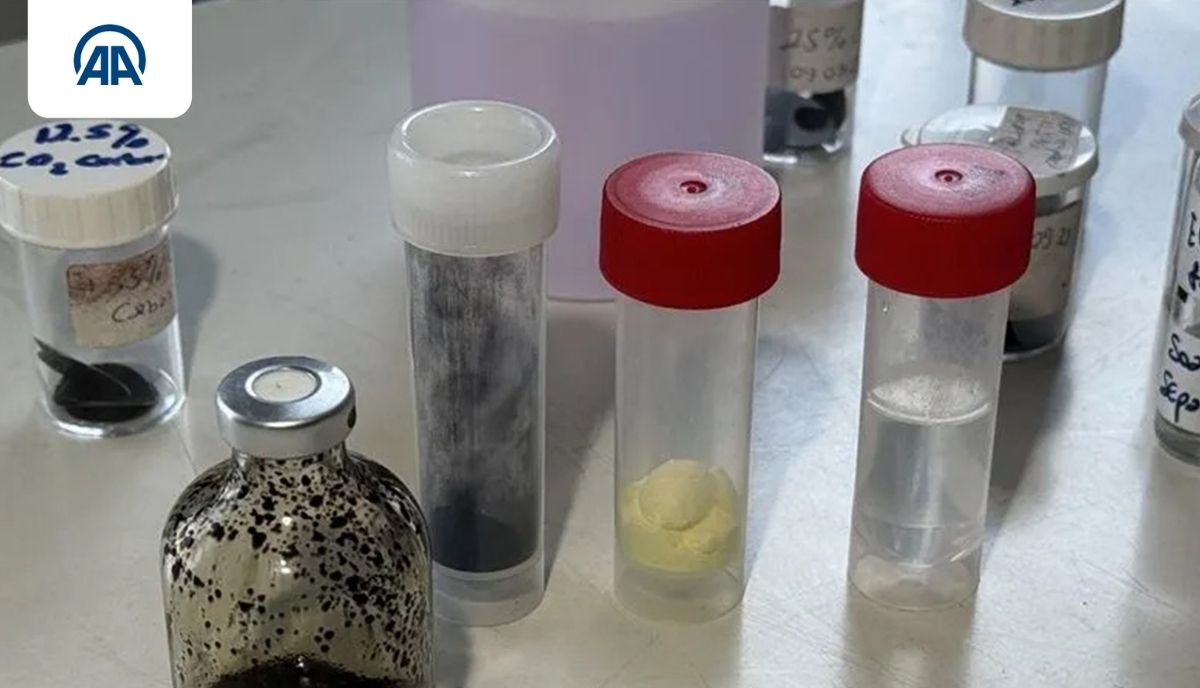
Associate Professor Dr. Ali Can Zaman, a faculty member in the Department of Metallurgy and Materials Engineering at YTÜ, and his research team have developed an electroactive hybrid polymer that could contribute to new-generation battery technologies offering long life and fast charging capabilities. The invention, registered by the Turkish Patent and Trademark Office, is intended for use not only in energy storage but also in fields such as carbon capture and water purification.
Our university has achieved yet another significant milestone in the field of energy storage technologies. The electroactive hybrid polymer developed by our Department of Metallurgy and Materials Engineering faculty member Assoc. Prof. Dr. Ali Can Zaman and his research team stands out as a significant innovation that could contribute to the development of next-generation battery technologies with longer lifespans and faster charging capabilities.
The work, registered by the Turkish Patent and Trademark Office, holds potential for use not only in energy storage technologies but also in various other fields such as carbon capture and water purification.
A novel polymerization method for next-generation batteries has been developed
As part of their research, our university’s team developed a new-generation hybrid polymer by reacting elemental sulfur with acetone using a unique polymerization method.
The developed material retains sulfur’s energy storage capacity while also incorporating the advantages provided by organic compounds. Thus, a new class of materials has been introduced that could contribute to long-lasting, fast-charging, and high-performance battery technologies.
"We have obtained a new polymer with hybrid properties"
Commenting on the study to the Anadolu Agency (AA), Assoc. Prof. Dr. Ali Can Zaman, a faculty member in the Department of Metallurgy and Materials Engineering, stated that the primary goal of the research was to improve the performance of energy storage systems. Noting that they have focused their research specifically on lithium-sulfur batteries, Zaman made the following assessment:
"Using this method, we produced polymeric materials by inducing a reaction between elemental sulfur and organic compounds that would not normally react under standard conditions. The new material we developed retains sulfur’s energy storage properties while also incorporating the distinct properties derived from the organic compounds. In fact, we have developed a new polymer that exhibits hybrid properties."
Assoc. Prof. Dr. Zaman emphasized that, following sufficient optimization, the developed electroactive polymer could make significant contributions to the development of batteries with longer lifespans and faster charging and discharging capabilities.
The study offers a unique approach to the scientific literature
Noting that the method developed as part of the research offers a scientifically original approach, Assoc. Prof. Dr. Zaman noted that although similar studies have been conducted in the past, using this method to react a simple organic molecule such as acetone with elemental sulfur has paved the way for the emergence of a new class of materials in the literature.
It offers applications beyond energy storage
The hybrid polymer developed at our university is not limited to battery technologies. The research team’s studies have demonstrated that the material yields successful results in carbon dioxide capture applications, while its sulfur-containing structure also indicates significant potential in water purification technologies.
It is believed that the material, which can exhibit sponge-like behavior—particularly in the removal of heavy metals such as mercury from water—could be effectively utilized in environmental technologies in the future.
In addition, research is ongoing into the use of the developed polymer in gas separation and adsorption applications.
The goal is to make a multifaceted contribution to energy and environmental technologies
The electroactive hybrid polymer, developed at our university and registered by the Turkish Patent and Trademark Office, is attracting attention as a versatile material that can be used in many strategic areas such as energy storage, carbon capture, gas separation, and water treatment. The study is expected to make significant contributions to the development of sustainable energy technologies and environmentally friendly solutions.
We wholeheartedly congratulate our faculty member, Assoc. Prof. Dr. Ali Can Zaman, and his research team for bringing this original work—which contributes to next-generation energy storage technologies—to fruition; we wish them continued success in their efforts to shape our country’s future in the fields of science, technology, and sustainability.
Other News