



























AA Yeşilhat at YTÜ: "Electric vehicle batteries are finding a second life in UPS systems"
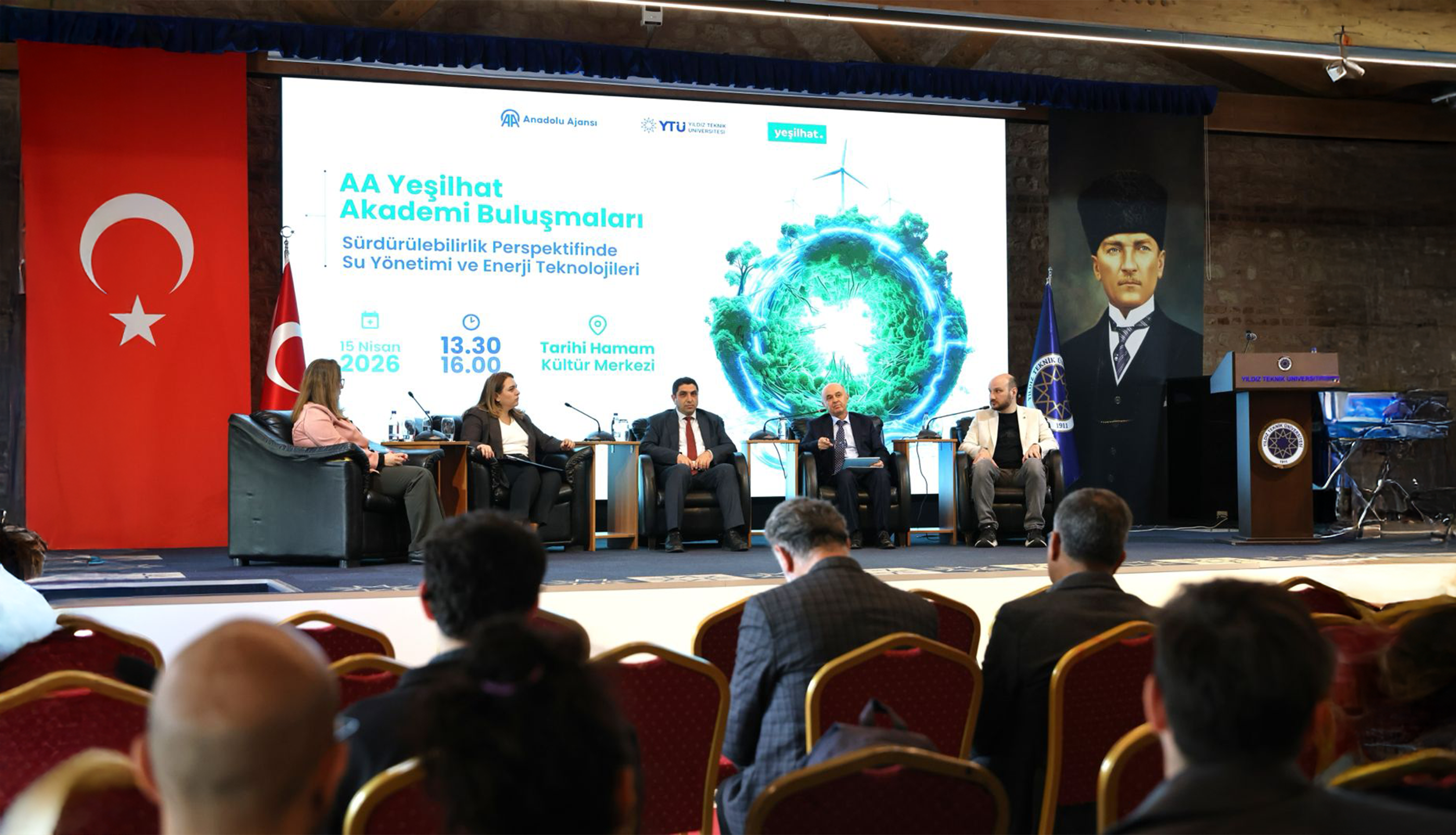
At an event held at Yıldız Technical University as part of the Anadolu Agency Green Line Academy Meetings, the role of water management and clean energy technologies in combating climate change was discussed from an academic perspective.
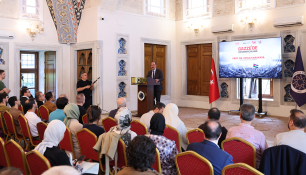
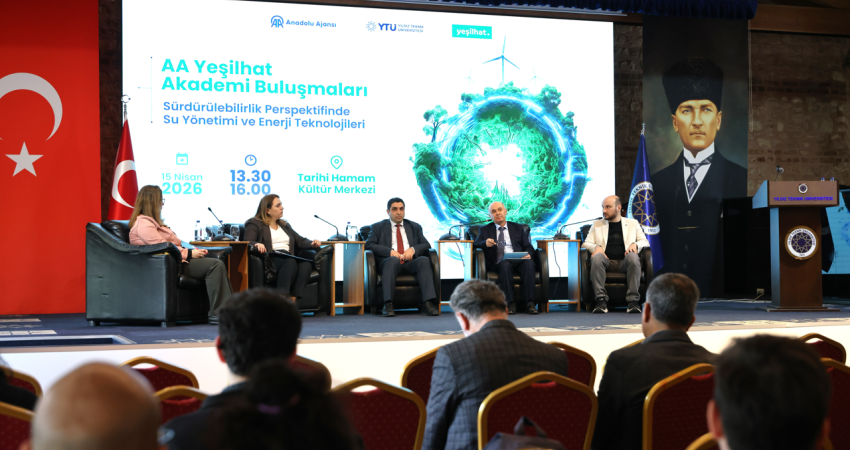
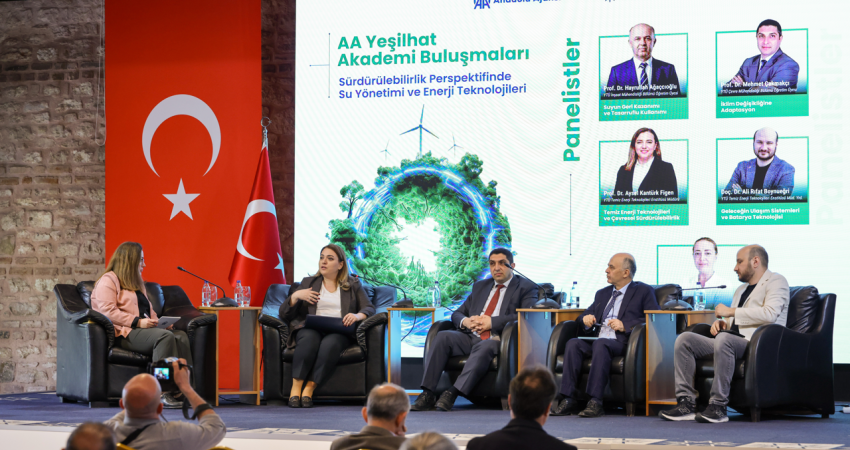
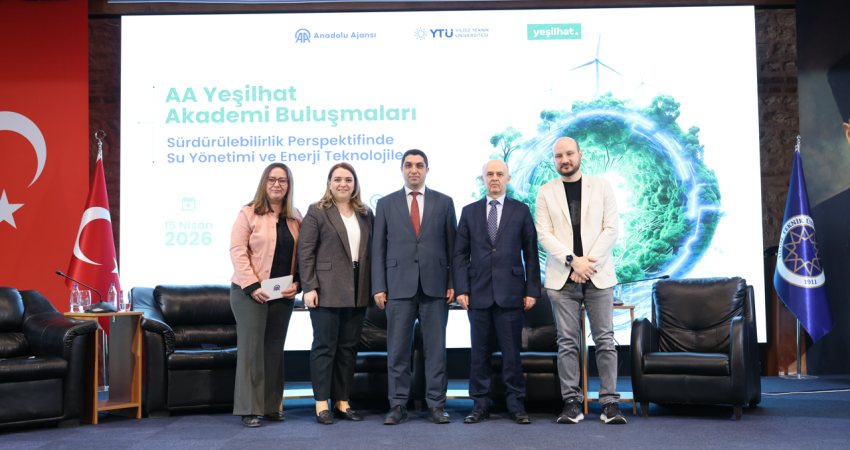
Yıldız Technical University (YTÜ) served as the new venue for the Yeşilhat Academy Meetings, an event organized by the Anadolu Agency (AA) Environment and Agriculture News Directorate in collaboration with universities, with a focus on the environment and nature. The panel titled “Water Management and Energy Technologies from a Sustainability Perspective” was held at the Historical Hamam Cultural Center on YTÜ’s Davutpaşa Campus.
Moderated by AA Environment and Agriculture News Reporter Gülseli Kenarlı, the panel featured YTÜ Clean Energy Technologies Institute Director Prof. Dr. Aysel Kantürk Figen, Faculty of Civil Engineering Department of Civil Engineering Faculty Member Prof. Dr. Hayrullah Ağaçcıoğlu, Prof. Dr. Mehmet Çakmakçı, a faculty member of the Department of Environmental Engineering at the Faculty of Civil Engineering, and Assoc. Prof. Dr. Ali Rıfat Boynueğri, Deputy Director of the Institute of Clean Energy Technologies.
"Sustainability should not only bring to mind environmental engineering"
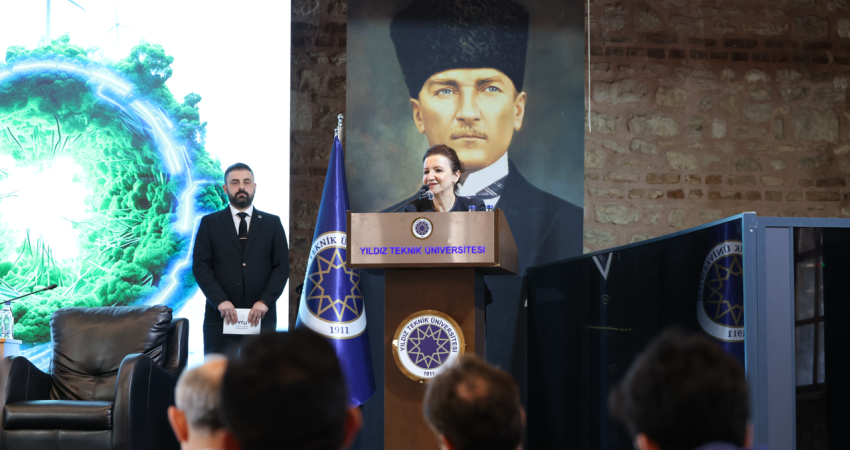
The program began with an opening speech by Prof. Dr. Güleda Engin, Vice Rector for Research and Planning at YTÜ. In her speech, Prof. Dr. Engin summarized YTÜ’s sustainability vision and innovative projects, emphasizing that sustainability is not merely an environmental concept.
Engin stated, “When we talk about sustainability, we shouldn’t think only of areas related to environmental engineering. Sustainability is a topic we must address in very different dimensions—in finance, in production, and in the energy sector.”
Referring to YTÜ’s green campus goals and its leading position in the energy sector, Prof. Dr. Engin remarked, “When evaluated by various indices, our research in the energy sector ranks at a very significant level. We can say we are number one in Turkey.”
"Switching to pressurized irrigation could increase agricultural productivity to 90%"
Prof. Dr. Hayrullah Ağaçcıoğlu, who spoke first at the panel, drew attention to Turkey’s available water potential, noting that approximately 75% of total water consumption occurs in the agricultural sector.
Referring to the high water loss in traditional open-channel and flood irrigation methods, Ağaçcıoğlu said, “The transition to pressurized and drip irrigation systems could increase agricultural productivity to 90%.”
Ağaçcıoğlu noted that storage methods such as rainwater harvesting in urban areas and infiltration galleries in rural regions hold strategic importance for creating an additional water source during drought periods.
"Wastewater should not be seen as a burden, but as a source of fresh water"
Prof. Dr. Mehmet Çakmakçı, who assessed the destructive effects of climate change on the hydrological cycle, emphasized that the perspective on wastewater management must change completely.
Noting that wastewater is not a burden to be disposed of but rather a valuable resource, Çakmakçı stated, "Today, the widespread adoption of advanced biological treatment systems to reuse water in industry and agriculture is of vital importance."
Çakmakçı also highlighted that the use of digital twin technologies and artificial intelligence in infrastructure systems will be a key determinant in the real-time management of future flood and drought crises.
"We must focus on next-generation electrolyzer technologies"
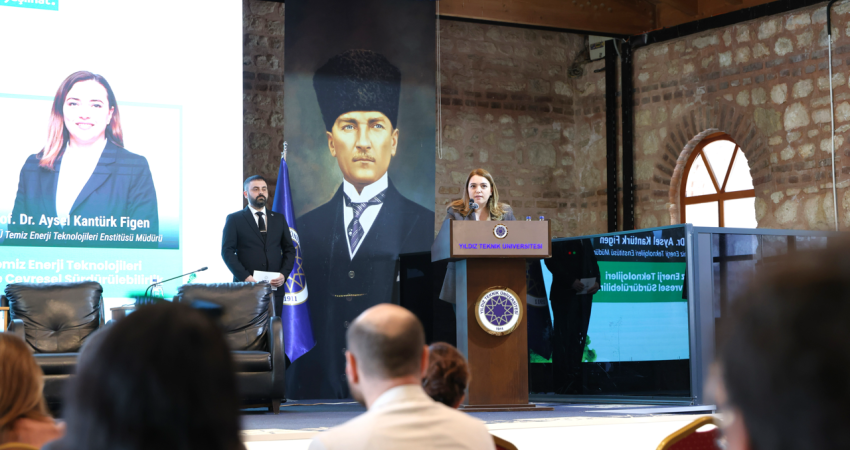
Prof. Dr. Aysel Kantürk Figen also emphasized the strong link between energy production processes and water usage, noting that the water footprint must be meticulously calculated in investment projects.
Explaining the importance of integrating "Power-to-X" technology—which converts carbon dioxide captured from the atmosphere or industrial facilities into useful synthetic fuels—into renewable energy investments, Figen shared the following observation: "For the energy infrastructure of the future, we must focus on next-generation electrolyzer technologies that can directly process seawater and operate independently of precious metals" she noted.
"Evaluating batteries under the 'second life' framework is essential"
Assoc. Prof. Dr. Ali Rıfat Boynueğri, meanwhile, assessed the contributions of electrification in transportation systems to energy efficiency. Noting that battery-powered vehicles offer a significant advantage in well-to-wheel energy efficiency compared to internal combustion engines, Boynueğri stated that using renewable energy sources for electricity generation maximizes environmental benefits.
Boynueğri emphasized that end-of-life vehicle batteries should not be sent directly to recycling, stating, “Evaluating these systems as ‘second-life’ applications—such as uninterruptible power supplies (UPS) or storage units in renewable energy plants—is essential for a sustainable ecosystem.”
Other News