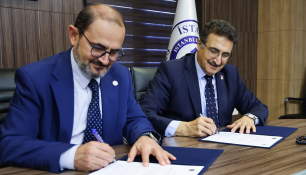




























Our researchers have developed asphalt that doesn't crack in cold weather
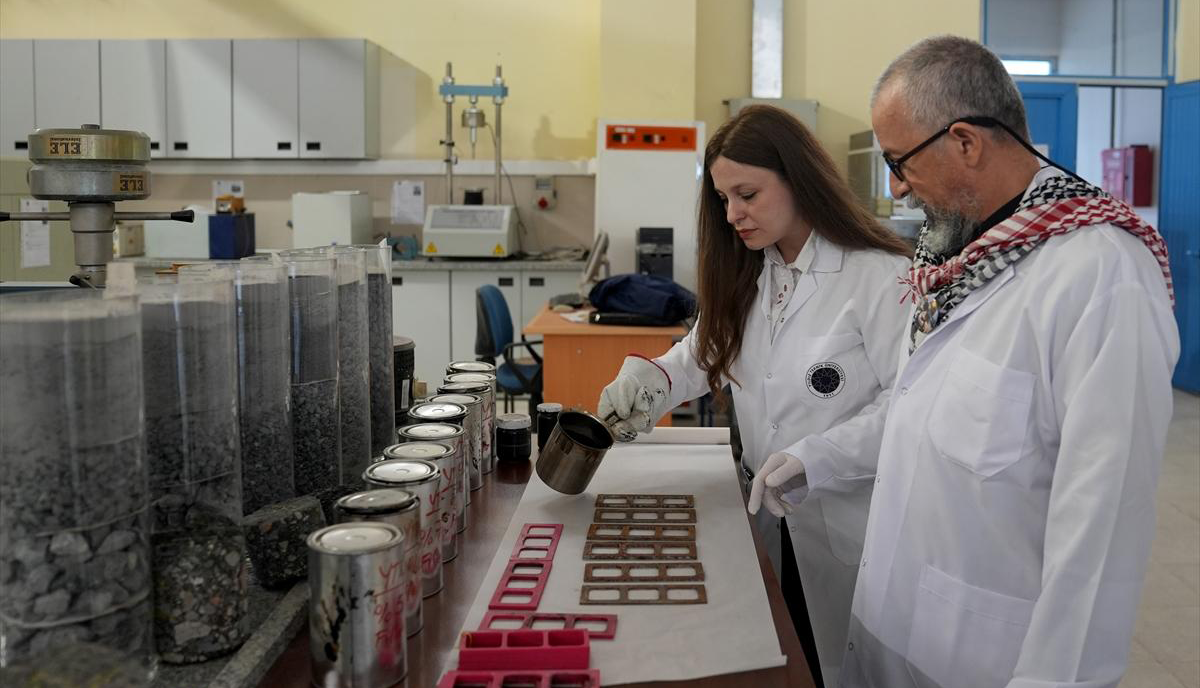
Academics at Yıldız Technical University have developed an asphalt material resistant to cracking at temperatures 10 degrees lower than standard practices. Thanks to this patented invention, roads will now have a longer lifespan and costs will decrease.
Yıldız Technical University (YTÜ) Department of Civil Engineering Assistant Professor Dr. Mustafa Sinan Yardım and Lecturer Dr. Betül Değer Şitilbay have developed a new asphalt material aimed at extending the service life of highways and reducing maintenance and repair costs.
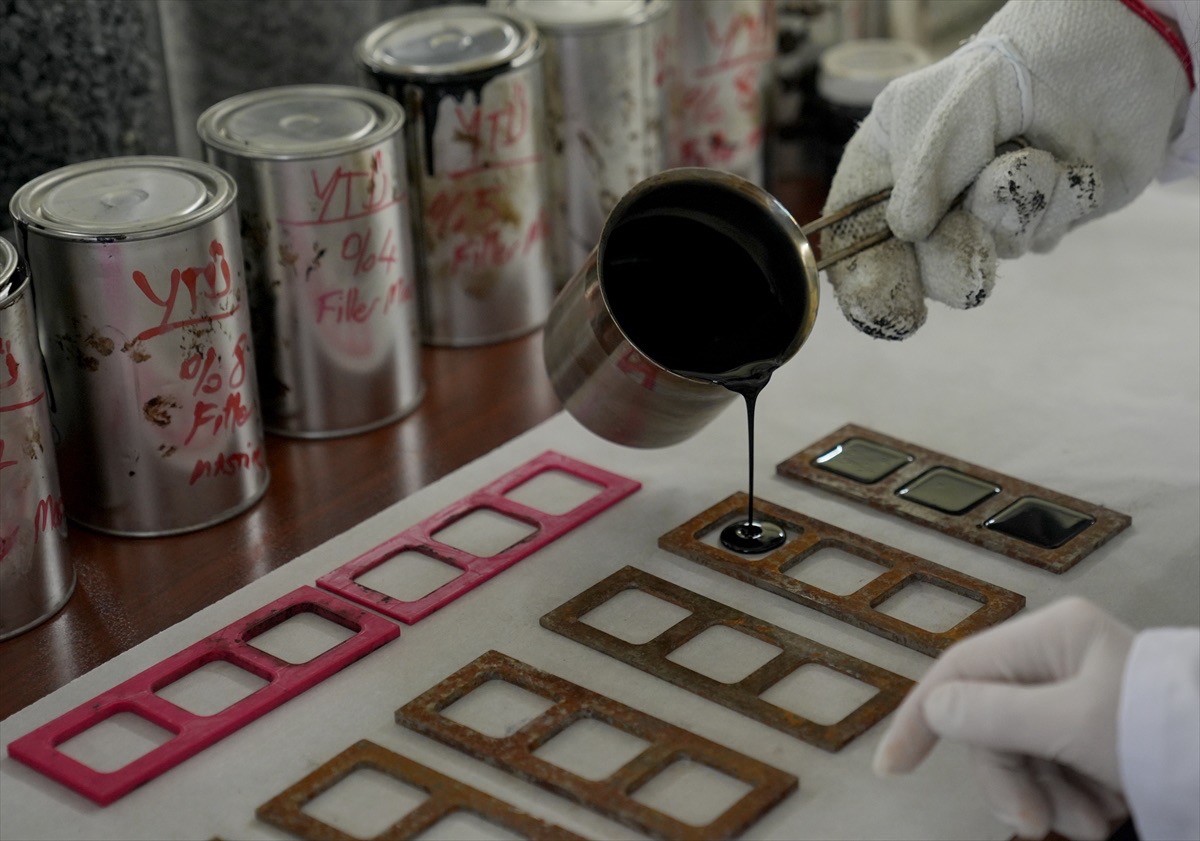
In the project, bitumen—the primary binder in asphalt—was reinforced with a polyester resin featuring a special chemical formula. The molecular structure of this new material was then analyzed using nano-scale techniques. Produced in compliance with environmental standards and designed to enhance durability, the new asphalt material was patented by the Turkish Patent Office and the U.S. Patent and Trademark Office through YTÜ Yıldız Technopark.
Our academics discussed all the details of the process and the successful results achieved with a reporter from the Anadolu Agency (AA).
"Our asphalt will not degrade easily under lower temperature conditions"
Assoc. Prof. Dr. Mustafa Sinan Yardım told the AA reporter that the study began before the COVID-19 pandemic.
Noting that they continued their work during the pandemic, Yardım said, "We produced a polyester resin additive to improve the properties and performance of asphalt mixtures in road pavements, incorporated it into the mixture, and conducted a study on its properties."
Yardım explained that the primary goal of the study was to ensure that asphalt can withstand lower temperatures without cracking, adding, "Here, we created a structure resistant to cracking by lowering the temperature by about 10 degrees."
Explaining that asphalt serves as the surface over which vehicles travel, Yardım noted that asphalt mixtures consist of bitumen and aggregate, with bitumen being the key component that binds these structures together.
Yardım noted that different climatic conditions affect asphalt, particularly rapid temperature changes and low temperatures, which cause deterioration and cracking on asphalt surfaces.
Emphasizing that they developed a polyester resin to address these issues, Yardım said, “We produced a polyester resin to ensure it does not crack even at lower temperatures and measured its contribution to this process. We asked ourselves if we could evaluate this more quickly using non-destructive methods such as dielectric loss measurements, and we succeeded. Our asphalt will not deteriorate easily under lower temperature conditions."
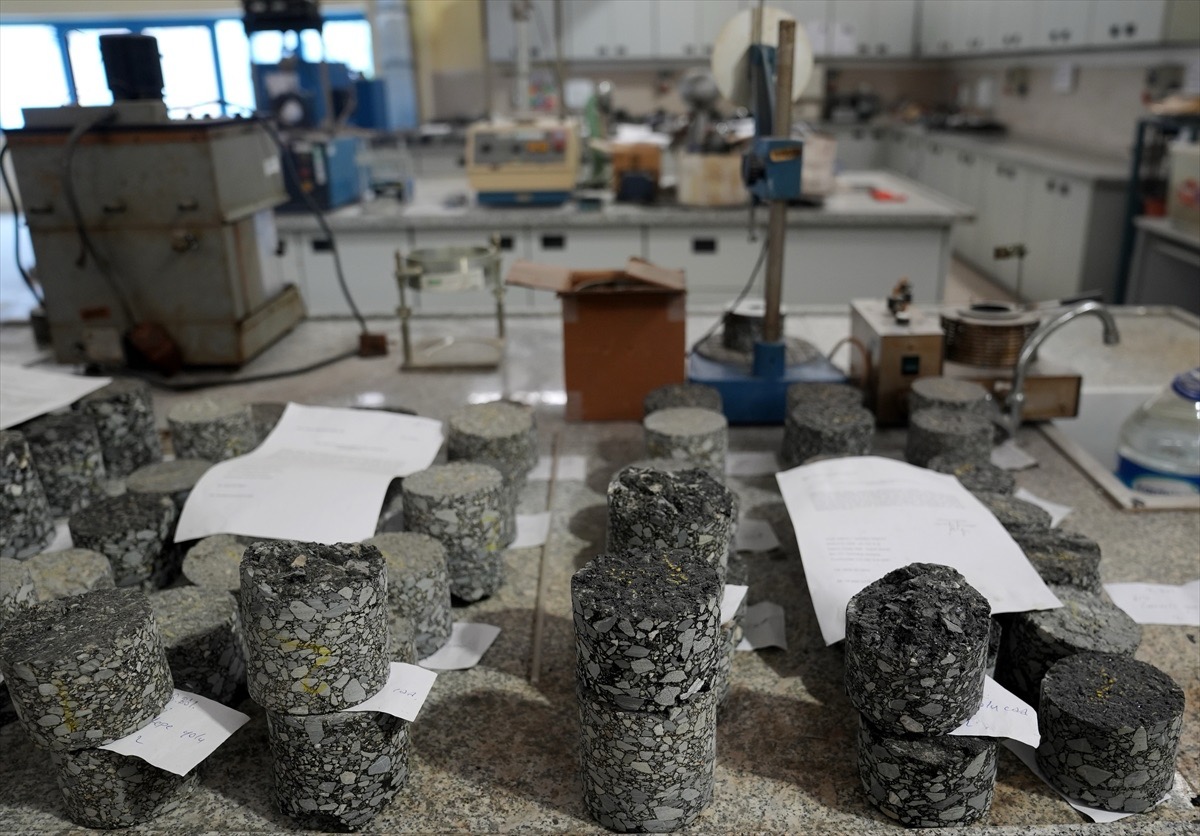
"We’ve extended the durability of the polyester to lower temperatures"
Assoc. Prof. Dr. Yardım explained that while there are some studies in this field worldwide, the developed polyester resin and measurement method were used for the first time, which is why the study was deemed worthy of a patent.
Noting that asphalt contracts and tends to crack in cold weather, Yardım stated, "We used polyester to lower its resistance capability to even lower temperatures. For example, these dielectric properties, particularly the glass transition temperature, become evident at minus 20 degrees. We have lowered this to as low as minus 30 degrees. This is a major achievement."
Yardım noted that the process they used strengthened the binder’s properties, adding:
"We used a new material—a polyester resin—and we also employed this measurement method for the first time here. Consequently, this emerged as an original application and idea. It was first patented in our country. Later, this patent was reviewed in the global literature and patented internationally. We now hold a national patent and a U.S. patent. This is a testament to its originality and success."
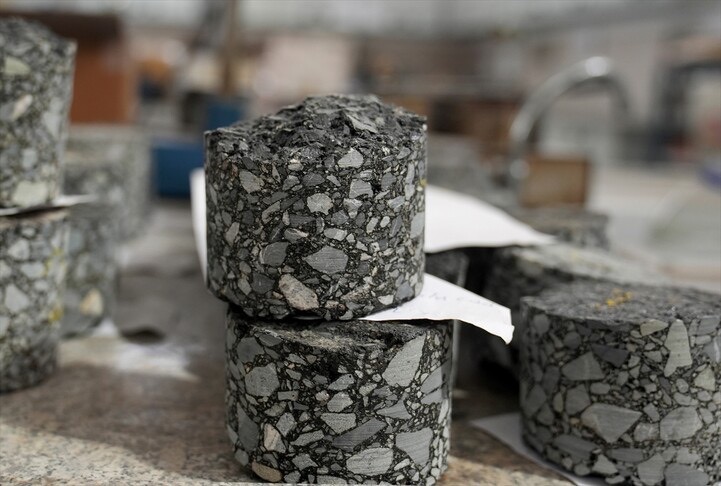
"We have succeeded in making it a material that cracks later"
Dr. Betül Değer Şitilbay, who was part of the study, also stated that they conducted a long-term research process.
Explaining that they began the research to identify and develop solutions for damage occurring in road pavements, Şitilbay noted that they formed an interdisciplinary team during the process.
Şitilbay noted that researchers from Istanbul University and Istanbul University-Cerrahpaşa, in addition to YTÜ, contributed to the study, and emphasized that they sought to solve problems in the field of civil engineering by collaborating with different disciplines.
Explaining that they had focused on a material to improve low-temperature performance and, following detailed literature reviews, decided to use a polyester resin-modified material, Şitilbay stated that they further developed their work after the initial analysis results proved positive.
Pointing out that the research holds significant potential not only academically but also for practical applications, Şitilbay said, “Unlike standard bitumen, our material remains intact at low temperatures, is more resistant to cracking, and has reduced brittleness due to temperature drops, and it cracks later."
"Positive results are emerging in terms of cost"
Noting that the degradation process begins as soon as road pavements are laid but can be delayed, and that bitumen modification is one such solution, Şitilbay continued:
"A small savings achieved in asphalt pavements creates a significant impact over kilometers. Thanks to modified bitumen, you also extend the material’s maintenance and repair cycles. Maintenance is required later. This also extends the road’s service life. Consequently, it results in a more sustainable road surface and yields positive outcomes in terms of cost. The experimental method we used in the study is also innovative. We employed the ‘dielectric spectroscopy’ method, which works on smaller samples compared to standard bitumen tests. Thanks to this method, we were able to examine the material’s molecular structure. I call this ‘nano ID.’ Because we can easily observe the internal structure of a small material and assign it a nano identity."
Şitilbay added that one of the most significant findings from the measurements was that the material’s glass transition temperature dropped from minus 20 degrees to minus 30 degrees, which demonstrates that the asphalt maintains its flexibility and provides resistance against crack formation.
Other News