



























Dr. Abuzer Dişkaya: The path to artificial intelligence goes through Cogito

Speaking at the YTÜ Ideas Council, Dr. Abuzer Dişkaya discussed the epistemological transformation spanning from Ibn Sînâ to Descartes. Dişkaya stated that the “Cogito” concept, which forms the foundation of the modern world, has shaped not only philosophy but also the age of science, technology, and artificial intelligence. He explained that the idea of dominating nature and the modern technological mindset—extending all the way to artificial intelligence—are the result of an epistemological shift centered on the “Cogito.”
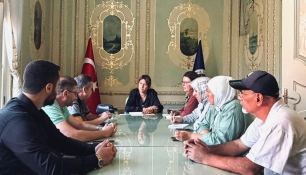
Launched with the goal of transforming universities into centers of science where ideas, strategies, and policies are generated, the YTÜ Ideas Council continues to host academic brainstorming sessions. The next stop in the series of thought and philosophy discussions organized by Yıldız Technical University with the participation of leading experts in their fields took place on June 12, 2026, at the Otağ-ı Hümâyun in the Davutpaşa Campus.
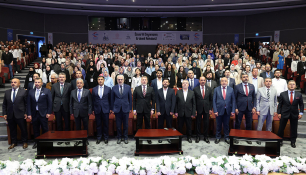
The guest of the event, held in a historic setting, was Dr. Abuzer Dişkaya, an assistant professor in the Department of Philosophy and Religious Studies at the Faculty of Islamic Sciences, Istanbul Sabahattin Zaim University. The program, attended by academics, students, and guests interested in the world of ideas, examined fundamental issues in the history of thought alongside current debates.
Remaining Human in the Age of Artificial Intelligence
Speaking at the opening of the program, Prof. Dr. Vatan Karakaya, Vice Rector for Education and Teaching at YTÜ, highlighted the importance of such forums in today’s world, where technological advancements are gaining momentum.Stressing the need for humans to preserve their essence in the face of advancing artificial intelligence systems, Karakaya stated, “We’ve built enough machines. Now we must defend ourselves against them and remain human.” Karakaya noted that the YTÜ Ideas Forum provides a strong foundation for reflecting on truth without being swept away by the fleeting trends of the era.
“Like a fish in the sea, we are unaware of the world we live in”
“From the Natural Universalism of Ibn Sina to the Cartesian Cogito: How and Why Did We Shift from Discovery to Construction?” Dr. Abuzer Dişkaya noted that people often accept as true, without question, the beliefs produced by the society and culture into which they are born.
Stating that people rarely feel the need to question their opinions on what is right, wrong, beautiful, or ugly, Dişkaya said, “We are so immersed in our daily lives that we are like fish in the sea; we are in the water but are unaware that we are in the water,” he said.
Noting that philosophy emerges at the point where one begins to question what is accepted as true, Dişkaya said that encountering people who think differently is essential for an individual to be able to ground their own thoughts.
“There can be no philosophy without encountering the other,” said Dişkaya, recalling Socrates’ method of dialogue and noting that truth is revealed through the encounter of different ideas. Noting that it is extremely difficult for a person to question their own beliefs, Dişkaya emphasized that Socrates’ realization—“The only thing I know is that I know nothing”—is one of the most important stages of philosophical inquiry.
“A philosophical foundation must be established between classical and modern thought”
Noting that thinkers such as al-Farabi and Ibn Sina developed original systems of thought by engaging with Greek philosophy, Dişkaya stated that there is a need today to establish a philosophical dialogue of a similar nature with modern thought.
Stressing that a genuine philosophical foundation must be established between classical and modern thought in order to understand the theoretical and practical problems the Islamic world has faced over the past two centuries, Dişkaya stated that the production of new thought is only possible through such a process of encounter and engagement.
“The Path to Understanding Descartes Lies Through Ibn Sina”
Placing the intellectual transformation between Ibn Sina and René Descartes at the center of his speech, Dişkaya noted that Ibn Sina is one of the strongest representatives of classical thought, while Descartes is the founding figure of modern thought.
“The path to understanding modern thought lies through Descartes, and the path to understanding Descartes lies through Ibn Sînâ. “Otherwise, it is truly impossible for us to grasp how the historical process could have given rise to Descartes,” said Dişkaya, adding that the relationship between the two thinkers is not merely a historical comparison but also the key to understanding the profound transformation in humanity’s understanding of knowledge and truth.
The Problem of the Possibility of Knowledge: The Issue of Unity and Multiplicity
Noting that the problem of knowledge is one of philosophy’s most fundamental issues, Dişkaya stated that humans establish a relationship with the realm of being through knowledge. Recalling that the Sophists rejected the possibility of knowledge, Dişkaya explained that philosophers throughout history have sought to respond to this challenge.
Dişkaya noted that the two distinct approaches put forward by Parmenides and Heraclitus deepened the problem of knowledge, explaining that one was based on unity and immutability, while the other was based on motion and change.
Dişkaya argued that in order to make a judgment on any subject, existence must possess both dimensions of unity and multiplicity, and, using the example of humanity, he emphasized that the relationship between unity and multiplicity is one of the most fundamental issues in the history of philosophy.
The Path from Discovery to Construction
Dr. Dişkaya noted that in the Ibn Sînâ tradition, knowledge fundamentally means the discovery of truth. He explained that while in this understanding the human mind is directed toward comprehending the essences and truth in the external world, this relationship has changed significantly in the modern era.
Explaining that Descartes began to question all knowledge through methodological doubt, Dişkaya stated that in this process, the senses, traditions, and the external world were all called into question, leaving only the thinking subject.
“Only ‘cogito’ emerges unscathed from the test of doubt,” said Dişkaya, noting that with his proposition “Cogito ergo sum—I think, therefore I am,” Descartes shifted the point of certainty from the external world to the subject.
Dişkaya noted that from this point onward, the fundamental problem of modern thought is the question of how the external world, God, and other entities can be re-founded based solely on the thinking subject. He added that the discovery-centered understanding of knowledge in classical thought has gradually given way to an understanding of knowledge constructed by the subject.
The Epistemological Transformation Extending to Artificial Intelligence
In the final section of his talk, Dişkaya also assessed the emergence of modern science and technology through the lens of this transformation, noting that Francis Bacon established a direct relationship between knowledge and power.
Stating that knowing nature no longer means merely understanding it, Dişkaya said that in the modern era, knowledge has also become a means of dominating nature. “The idea of dominating nature stems from the cogito,” Dişkaya remarked, noting that technology represents an effort to produce outcomes that nature does not generate on its own.
Dişkaya stated that this epistemological transformation also lies behind technological developments extending to artificial intelligence today, emphasized that the process extending from the Ibn Sînâ-inspired natural universal to the Cartesian ‘cogito’ is the story of the great transformation in humanity’s relationship with knowledge, truth, and existence—a shift from discovery to construction.
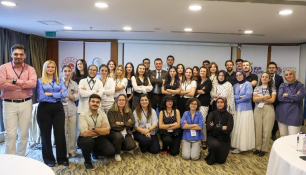
Following the question-and-answer session, the program concluded with YTÜ Vice Rector for Education and Teaching Prof. Dr. Vatan Karakaya presenting Dr. Abuzer Dişkaya with a commemorative gift and a group photo being taken.


Other News